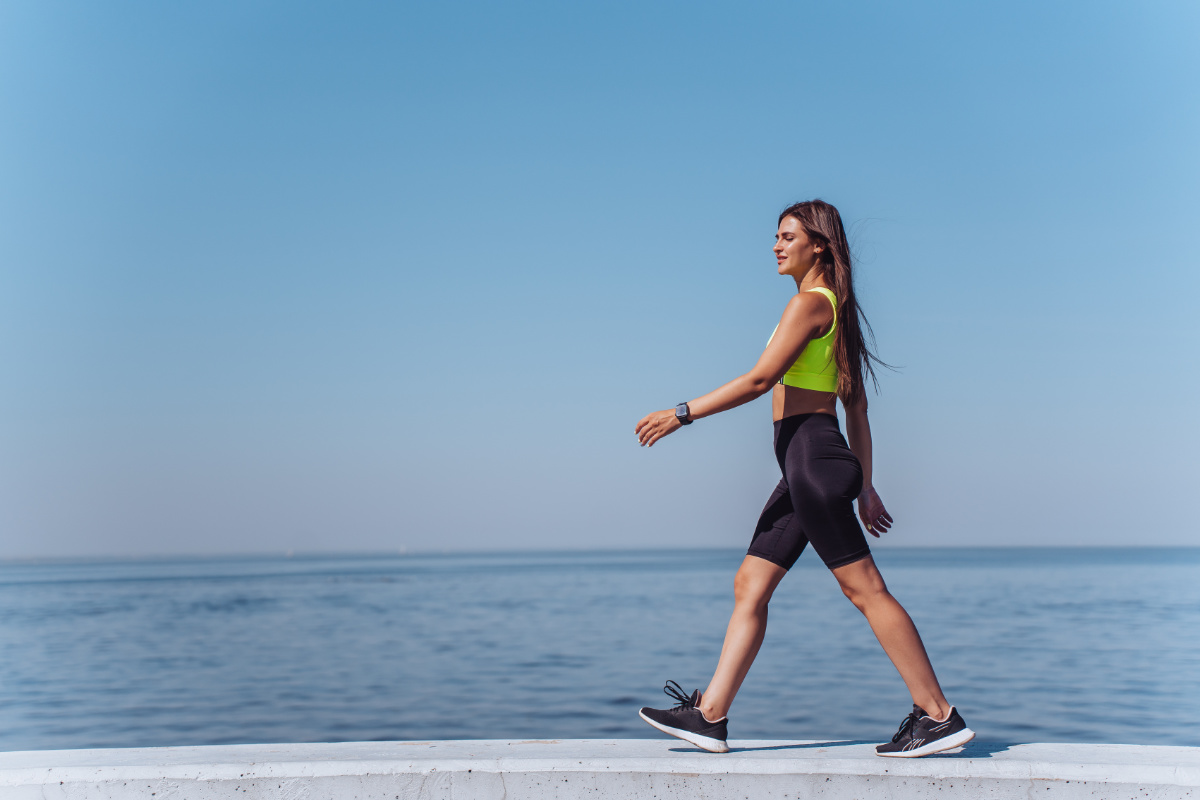
Can walking slim your waist?
Yes. Walking consistently does reduce waist circumference, especially the dangerous belly fat underneath your muscles. Aerobic walking for at least 150 minutes per week combined with a calorie deficit reliably shrinks your midsection. Every 30 minutes per week of aerobic exercise reduces waist circumference by about 0.56 cm. The key is showing up regularly and pairing it with nutrition that supports fat loss.
Why it works: Walking activates fatty acid oxidation in your muscles, meaning your body literally burns stored fat for energy during and after your sessions. This fat mobilization happens throughout your entire body, including the stubborn abdominal area.
Protocol & Recommendations
Consistency Over Intensity: The Real Driver
Walking doesn’t need to be fast or painful to trim your waist. The science shows consistent, moderate-paced walking outperforms sporadic intense efforts. Slow walkers lost total body fat progressively over 30 weeks, while fast walkers had to wait the full duration to see results. This means you won’t burn out, and you’ll stick to it.
Your body responds to energy expenditure—the total calories you burn matters more than whether they come from fat or carbs during the exercise. Walking at a comfortable, conversational pace activates beta-oxidation (the mechanism that breaks down fatty acids into usable fuel), especially on an empty stomach. That metabolic shift keeps working even after you’re done walking.
Action step: Aim for 30 minutes of walking four to five days per week. Start with whatever feels sustainable—even 10–15 minutes daily builds the habit. If you’re new to exercise, begin with three days a week and add one more day every two weeks.
Why it works: Consistency triggers a training effect. Your body adapts to regular movement by improving how efficiently it mobilizes and burns fat. Missing workouts resets this adaptation, so showing up matters more than the intensity of any single session.
Target Visceral Fat First: That’s Where Walking Excels
The fat around your organs (visceral fat) is metabolically active and responds aggressively to walking. Abdominal subcutaneous fat (the pinchable layer) shrinks too, but visceral fat is where your health actually improves. Walking activates hormone changes—specifically lowering insulin and raising catecholamine levels—that preferentially mobilize visceral fat.
Waist circumference is the best real-world measurement of this success. A 12-week walking program reduced both visceral and subcutaneous abdominal fat significantly in obese women, even without major diet changes, though results improved dramatically when combined with calorie restriction.
Action step: Track your waist measurement at the narrowest point, roughly level with your belly button. Measure every two weeks, not daily. You’ll notice the change before the scale moves.
Why it works: Visceral fat is more sensitive to catecholamine (adrenaline-like compounds) released during aerobic exercise. Walking doesn’t require the intense effort needed for high-intensity cardio, so it’s sustainable and doesn’t trigger excessive hunger or fatigue that derails your nutrition plan.
9 Steps To Shed 5–10kg in 6 Weeks
While spending as little as 90 minutes per week in the gym!
Includes an exercise plan, nutrition plan, and 20+ tips and tricks.
Without dead boring diets that are like watching paint dry
Without getting results at a snails pace
Gym or at home version
Add Inclines or Pace Variations: Progressive Challenge
Flat walking works, but adding hills or speed intervals increases calorie burn and recruits more muscle, especially in your core and glutes. This doesn’t mean sprinting—it means occasionally walking faster or on slopes where you need to work a bit harder.
Walking at different speeds teaches your body to handle varied intensity without the joint stress of running. Incline walking is particularly effective because it mimics resistance training and preserves lean muscle mass while fat comes off.
Action step: One or two days per week, walk uphill or at a brisker pace where you can talk but feel slightly out of breath. The other walks stay easy and conversational. This combination is called “mixed intensity” and produces results faster than flat walking alone.
Why it works: Progressive overload—gradually increasing the challenge—forces your body to adapt and burn more energy. You’re not just moving; you’re signaling to your muscles that they need to stay strong, which preserves the metabolic machinery that keeps fat off long-term.
Pair Walking With Calorie Awareness: Non-Negotiable
Walking alone won’t create the deficit needed for substantial weight loss unless your diet is already controlled. A 12-week study found that people combining walking with a 500–800 calorie daily deficit lost about 4 pounds more than those who didn’t walk—but both groups lost weight because of the diet. Walking is the amplifier, not the entire solution.
The mental health boost from walking (reduced anxiety, better mood, clearer thinking) actually makes it easier to stick to your nutrition plan because you feel better about yourself and less driven by stress-based eating.
Action step: Know roughly how many calories you’re eating. You don’t need obsessive tracking, but you need a baseline. A 154-pound person walking at moderate pace for 60 minutes burns roughly 280 calories; at a brisk pace, about 460 calories. That’s meaningful, but it’s not 1,000 calories—so your food choices still matter most.
Why it works: Fat loss is fundamentally about energy balance. Walking increases the calories you burn, but reducing calories you consume is faster and more reliable for waist reduction.
Do Both Short and Long Walks: Flexibility Matters
Some days, 25–30 minutes of walking fits your schedule. Other days, you have time for 60 minutes. Research shows both work. Women who split their walking into two 25-minute sessions lost slightly more weight than those who did one 50-minute session, likely because shorter bouts feel less intimidating and easier to sustain as a habit.
The consistency of showing up matters far more than the perfect workout structure. A 10-minute walk every day beats skipping five days and then doing one 50-minute marathon that leaves you sore and unmotivated.
Action step: Build flexibility into your plan. Monday might be 30 minutes, Wednesday 20 minutes, Saturday 60 minutes. The total weekly volume is what counts—aim for 150–300 minutes per week for best results.
Why it works: Flexibility removes the excuse barrier. If you’re locked into one 50-minute slot and miss it, you’ve failed the week. If you can do 20 minutes on Monday, 15 on Wednesday, and 40 on Saturday, you hit your weekly target regardless of disruptions.
Comprehensive FAQ Section
What if I don’t have 150 minutes per week to walk?
Start with what you can do. Research shows that even 75 minutes per week (roughly 30 minutes, three days weekly) produces meaningful reductions in waist circumference and improves health markers like blood pressure and cholesterol. Consistency at a lower volume beats inconsistency at a high volume.
Can I lose belly fat without changing my diet?
Walking alone is slower. A calorie deficit through food intake produces faster, more reliable waist reduction. That said, walking’s mood-boosting effect (endorphins and mental clarity) makes it easier to choose better food because you feel better about yourself. The two work together.
Does walking burn enough calories to matter?
Yes, but not as many per minute as running or intense cardio. A 154-pound person burns roughly 280–460 calories per 60-minute walk, depending on pace. That’s real, especially when done consistently over months. But the bigger picture: walking improves insulin sensitivity and increases non-exercise activity throughout your day, so your total daily calorie burn rises even on rest days.
Is slow walking as effective as fast walking?
For fat loss, both work. Slow walking burns a higher percentage of fat (roughly 90%+), while fast walking burns a higher total number of calories but uses more carbs. Since total calories burned determines weight loss, faster walking gets results quicker. But slow walking is easier to sustain long-term, so consistency wins. Mix both.
Does where I walk matter (treadmill vs. outdoor)?
No. Both reduce belly fat equally. Outdoor walking offers mental health benefits from fresh air and vitamin D, but a treadmill walk still works if that’s your reality. Choose what you’ll actually do.
How long before I see waist reduction?
Visceral fat responds fastest—some studies show measurable reductions after 12 weeks. Visible waist circumference changes typically appear in 8–12 weeks if you’re also supporting it with nutrition. Don’t obsess over daily measurements; waist circumference drops in steps, not smoothly.
Do I need to walk on an empty stomach?
No. Fasted walking activates slightly more fat oxidation (about 33% more), but the difference is marginal compared to the total calories burned. Walk whenever fits your schedule. A small meal before doesn’t stop fat loss; it just helps you perform better and sustain effort.
What if I have joint pain or can’t walk for 30 minutes straight?
Break it into chunks—three 10-minute walks burns the same calories as one 30-minute walk. Walking is also lower impact than running, so it’s often the better choice if you have joint concerns. If pain persists, see a physio.
Can I replace walking with other cardio (cycling, elliptical)?
Yes. Any consistent aerobic activity reduces waist circumference. The best option is whatever you’ll do consistently. Cycling and elliptical machines require less joint stress than running, making them excellent alternatives to walking if that’s your preference.
Is the “fat-burning zone” real—should I stay in heart rate zone 2?
The fat-burning zone (60–70% max heart rate) burns a higher percentage of fat, but you’ll burn more total fat at higher intensities because the calorie burn is so much greater. A 60-minute walk in zone 2 might burn 400 calories (90% fat). A 60-minute run in zone 4 burns 800 calories (20% fat). You burn 80 more grams of fat running. Don’t get trapped in the zone myth—total calories matter most.
Should I add weights or resistance while walking?
Yes, if you want faster results. Weighted walking (rucking) increases calorie burn by 30–50% while building strength, posture, and muscle that keeps metabolism high long-term. Start light (5–10 kg) to avoid injury. But bodyweight walking works fine—don’t skip walking because you don’t have weights.
The Science Behind Waist Reduction
Walking reduces waist circumference through several mechanisms. First, it activates fatty acid beta-oxidation, literally teaching your muscles to burn stored fat as fuel. This effect is metabolically durable—your body’s fat-burning machinery stays upgraded even on rest days.
Second, walking improves insulin sensitivity. Better insulin sensitivity means your body is less likely to store excess calories as visceral fat and more likely to mobilize existing stores. This happens independent of weight loss, though weight loss amplifies it.
Third, aerobic walking increases catecholamine levels (natural adrenaline-like compounds) that preferentially mobilize visceral fat, not just any fat. This is why visceral fat shrinks before you see dramatic scale changes—the dangerous belly fat responds first.
Finally, consistency triggers a training adaptation. After 8–12 weeks of regular walking, your body becomes more efficient at aerobic metabolism, meaning every walk burns more fat relative to carbs than your first walk did.
Key Takeaways
- Walking reduces waist circumference: 150 minutes per week produces reliable, measurable shrinking of belly fat.
- Start with what you can do: Even 75 minutes per week works; consistency beats perfection.
- Combine with calorie awareness: Walking amplifies fat loss but doesn’t replace a sensible diet.
- Visceral fat responds fastest: The dangerous belly fat shrinks before the scale moves.
- Inclines and pace variation: Add challenge one or two days per week to accelerate results.
- Mental health is the real bonus: Walking lifts mood, reduces anxiety, and makes it easier to stick to better choices.
- Track waist measurement, not just steps: Waist circumference is your best real-world progress marker.
Next Step: Start This Week
You don’t need a perfect plan. This week, commit to three 20–30 minute walks at a comfortable pace where you can still talk. Pick times that fit your actual life—early morning, lunch break, evening. Don’t overthink it.
After two weeks, add one day where you either walk uphill or pick up the pace slightly. Keep the other walks easy.
Over the next month, notice how your mood improves, your energy lifts, and your clothes feel different around the waist. That’s your body responding—visceral fat leaving, metabolism shifting, health markers improving.
The waist reduction follows. It always does when you show up consistently.