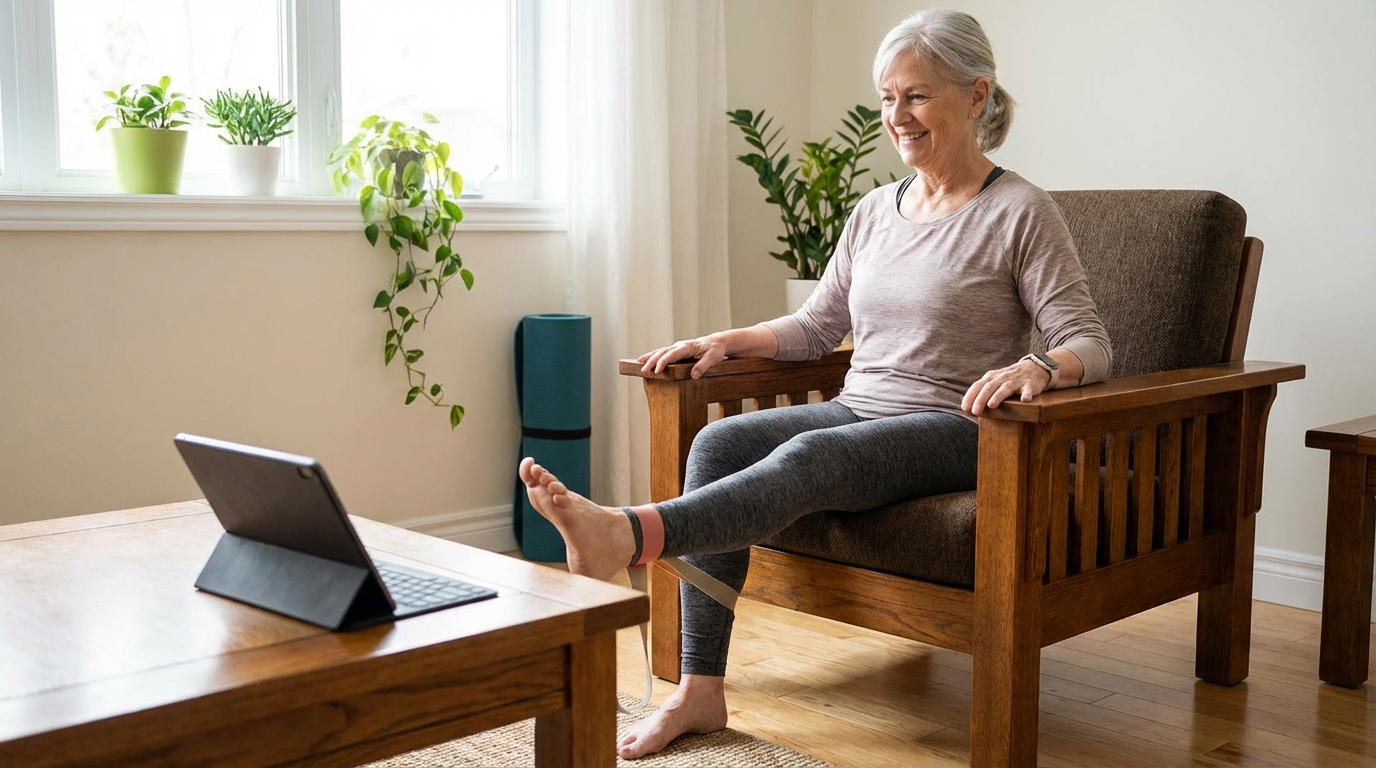
You should finish a workout feeling worked but not wrecked. Within an hour or two, most people feel pleasantly tired and often more alert than before they started. Your muscles may feel heavy and a little sore the next day, but you should still be able to walk, take the stairs and get through your normal routine. If a session leaves you flattened for hours, or soreness changes how you move through your week, the workout was probably too much for where you are right now.
What does normal post-workout tiredness feel like?
Healthy workout fatigue is easy to recognise. Your muscles feel a bit heavy, and mild soreness often shows up 12 to 24 hours later. This is delayed onset muscle soreness, or DOMS. It usually peaks somewhere between 24 and 72 hours after exercise and then fades. It is a sign your muscles have been challenged and are adapting.
The immediate, short-term fatigue from a hard effort clears quickly. Most of the drop in muscle function recovers within hours rather than days, so you should be able to walk, climb stairs and do ordinary tasks soon after you finish.
A 2022 meta-analysis of exercise trials found that people typically report more energy within about an hour of finishing moderate exercise, not less. Exercise raises norepinephrine and dopamine, which helps explain the lift in alertness and mood.
How much muscle soreness is too much?
Mild to moderate soreness is normal, especially when you try a new exercise, increase your load or return after a break. Hard or unfamiliar work causes microscopic damage to muscle fibres, and the repair process contributes to that achy feeling over the following one to three days.
Soreness becomes a problem when it interferes with daily life. If you can’t lift your arms to wash your hair, you struggle to lower yourself onto a toilet, or pain limits your range of motion, you pushed too hard. Pain that is sharp, localised or one-sided is different from general muscle ache and deserves caution.
If you want to ease soreness, a 2018 meta-analysis in Frontiers in Physiology found massage to be among the most effective recovery methods. Cold water immersion, compression garments and active recovery also help, though the effects are smaller.
Know the warning signs of rhabdomyolysis, a rare but serious condition where muscle breaks down so much that its contents, including the enzyme creatine kinase, overwhelm the kidneys. Seek medical attention promptly if you have severe pain and swelling, marked weakness, dark tea- or cola-coloured urine, or you are passing very little urine. The same applies if soreness is not improving after 48 to 72 hours.
Should you feel exhausted hours after working out?
No. Exercise should give you energy back, not take it for the rest of the day. A University of Georgia study of 36 sedentary volunteers found that low-intensity exercise over several weeks increased energy by about 20% and reduced fatigue by about 65%. The gains appeared whether or not people became fitter, which suggests exercise acts directly on how we feel.
Regular training also builds more mitochondria in your muscle cells. These produce energy from the food you eat and the oxygen you breathe, so over time you have more capacity to work with, not less.
If you feel drained two or three hours after a session, look at the usual suspects: too much volume or intensity, too little food, too little fluid or too little sleep. Your body needs protein to repair muscle and carbohydrate to refill energy stores. Without them, tiredness lasts longer and feels heavier.
Rest between sets matters too. A 2024 study in Scientific Reports found that people who took no rest between sets saw their power output fall steadily, while groups resting 45 or 90 seconds held up much better. If you are finishing sessions flat, try lengthening your rests before you cut the workout.
What’s the difference between good tired and overtraining?
Good tired means you feel accomplished and a little fatigued, and you bounce back within a day or two. Overtraining means persistent exhaustion that doesn’t lift with rest.
Overreaching, a short-term dip from training hard with too little recovery, is common in athletes, with some surveys of endurance athletes reporting it in a large share of competitors. Overtraining syndrome is the more severe, longer-lasting end of that spectrum. Signs include performance decline in activities that used to feel easy, poor sleep, mood disturbances, lower motivation, a raised resting heart rate and lingering heaviness in your legs.
Your muscles repair and grow during recovery, not during the workout itself. Train the same muscles hard every day with no break and you interrupt that process, so you feel progressively more tired rather than stronger.
Recovery doesn’t have to mean lying still. A 2016 study comparing recovery methods in athletes found that 20 minutes of low-intensity cycling brought muscle electrical activity back to pre-exercise levels better than passive rest or arm exercises. Easy movement the day after a hard session usually beats the couch.
How does workout intensity affect fatigue?
Higher intensity doesn’t always mean more fatigue, and it doesn’t always mean better results either. In a 2008 University of Georgia study, people exercising at a low intensity (about 40% of peak oxygen consumption) had a 65% reduction in fatigue, compared with 49% for the moderate-intensity group at about 75%. The researchers suggested that moderate-intensity exercise may be more than people who already feel tired can comfortably handle, and gentle movement is often the better starting point.
The type of exercise matters as well. Eccentric work, where the muscle lengthens under load, such as running downhill or lowering a weight slowly, causes more soreness than other movements because it creates more microscopic muscle damage.
How you structure the session also changes how you feel afterwards. If you’re planning a program, it helps to be clear on whether sets or reps come first in workout notation, so you know exactly how much volume you’re actually doing.
Research on acute exercise also suggests that feelings of energy rise most after low to moderate intensity sessions lasting longer than about 20 minutes. Very short bursts or all-out efforts tend to give less of an energy lift.
When should exercise make you feel energized instead of tired?
You should notice a lift within roughly 15 to 60 minutes of finishing. Better blood circulation, hormone changes and improved oxygen delivery all contribute to that post-workout surge.
A meta-analysis covering 678 participants across 16 studies found that exercise boosted feelings of energy straight after sessions. Reductions in fatigue were clearest when the energy boost was fairly large, which typically meant sessions of 20 minutes or more at a low to moderate intensity.
Regular activity also trains your body to cope. A 2006 systematic review found that active adults had a markedly lower risk of persistent fatigue than sedentary people, and the pattern held across different types of exercise and different populations.
How long should it take to recover between workouts?
Recovery depends on how hard you trained and which muscles you used. Light cardio or moderate strength work generally needs 24 to 48 hours before you train the same muscles again. Heavy lifting or high-intensity intervals often need 48 to 72 hours.
A 2025 randomised controlled trial in Frontiers in Physiology followed 30 participants through a standardised fatiguing protocol and measured creatine kinase, a marker of muscle damage, at baseline, straight after exercise and at 24, 48 and 72 hours. Levels stayed elevated through 72 hours in the control group, but fell back faster when recovery strategies like massage or cold water immersion were used.
Age plays a part. Muscle mass starts to decline after about 30, at roughly 3 to 8% per decade, so recovery between hard sessions becomes more important. Older adults can still train hard, but they usually benefit from a little more time between demanding workouts.
You can train different muscle groups on consecutive days. A heavy leg session on Monday doesn’t stop you training upper body on Tuesday. The key is not hitting the same muscles hard again before they have repaired.
Planned easier weeks help too. Research suggests you can maintain muscle on a much lower training volume than you need to build it, so a lighter week keeps your gains while your body catches up. If a niggling injury is behind your fatigue, a structured rehab plan is worth considering, and it helps to understand how clinics bill and plan sessions, including the 8-minute rule in physical therapy.
What role does nutrition play in post-workout tiredness?
What and when you eat strongly shapes how tired you feel. Your muscles need protein to repair and carbohydrate to refill the glycogen you burned during the session.
Reviews on nutrient timing suggest that eating soon after training supports recovery better than waiting a long time. A practical window is within about two hours of finishing, and sooner if you trained hungry.
Dehydration makes fatigue worse and soreness feel longer. As a rough guide, sip about 150 to 250 millilitres every 15 to 20 minutes during longer sessions. For a check on how much you lost, weigh yourself before and after. For each kilogram lost, aim to drink about 1.25 to 1.5 litres over the next few hours.
Active people may also fall short on micronutrients such as magnesium, vitamin D and omega-3 fats, so it’s worth looking at your overall diet before reaching for supplements.
Skip meals or under-eat and exhaustion tends to intensify and linger. A bowl of quinoa with vegetables and chicken, or peanut butter toast with an apple, gives your muscles the protein and carbohydrate they need.
What if you never feel tired during or after workouts?
Feeling no fatigue at all can mean you aren’t challenging yourself enough. Progressive overload, gradually increasing weight, reps or difficulty over time, is how muscles adapt and grow. If your sessions always feel easy, your body isn’t getting a strong enough reason to change.
Some people also tolerate training better than others. Fibre type, training history, sleep and genetics all affect how quickly someone recovers from the same workout, so a person who looks very fit isn’t necessarily working harder than someone else.
Use the talk test to check your intensity. During moderate exercise you should be able to talk but not sing. During vigorous exercise you should only manage a few words before pausing for breath. If you can chat comfortably through the whole session, you’re probably not working hard enough.
Experienced lifters often report less overall fatigue from sessions, because months and years of training have made their muscles, heart and nervous system more efficient at handling the stress.
How can you tell if soreness is a green light or a red light?
The most useful question isn’t how sore you are but what the soreness does to your week. The clearest sign we see of overdoing it is soreness that changes how a client moves through their day, not the level of ache on its own.
Here is how we sort it out in practice:
- Green light: you’re sore but moving normally, you still feel strong in your next session and your energy is steady. In that case we keep building.
- Amber light: soreness is nagging, you’re stiff getting out of bed or you’re tired by mid-afternoon. We hold the load steady and add easy movement and food or sleep fixes.
- Red light: soreness limits daily movement, such as stairs, reaching overhead or getting out of a chair. We ease the load, and that is when we change the plan.
One client told us she was very sore after a Sunday session. Rather than push through, we adjusted her plan to include more cardio and lower weights for a while, and her week got easier to move through. Another client felt sore and tired after her first week back following two and a half weeks off. We treated that as ordinary muscle tightness from returning, not as a warning sign, and she carried on with the plan. Same soreness on paper, different response, because of what it was doing to her life.
If you aren’t sure which light you’re in, a personal trainer in Rosebud can watch how you move and recover and adjust your program so you keep progressing without overdoing it.
Frequently Asked Questions
Is it normal to feel tired for 2 to 3 days after a workout?
Mild muscle soreness for two to three days is normal, but feeling completely exhausted for days is not. Your energy should return within a few hours. If fatigue persists, lower your intensity, eat enough protein and carbohydrate, and prioritise sleep. Easy movement and massage can help you feel normal again sooner.
Should I work out if I’m still sore from my last workout?
You can train with mild soreness, but avoid hitting the sore muscles hard. Light activity tends to ease soreness better than complete rest. Train upper body if your legs are sore, or the reverse. Gentle walking, yoga or swimming keeps blood flowing. If soreness limits your range of motion or you get sharp pain, rest that area until it settles.
Why do I feel more energized after exercise instead of tired?
Exercise increases norepinephrine and dopamine, which lift energy and mood, and regular training builds more mitochondria in your muscles. A 2022 meta-analysis found that energy rises within about an hour of moderate exercise lasting 20 minutes or more, and that this happens whether or not you get fitter.
How much water should I drink to avoid post-workout fatigue?
Sip about 150 to 250 millilitres every 15 to 20 minutes during longer sessions. Weigh yourself before and after training, and for each kilogram lost, drink about 1.25 to 1.5 litres over the next few hours. Dehydration intensifies fatigue and can make soreness feel worse.
What’s the best recovery method for reducing workout fatigue?
A 2018 meta-analysis found massage to be among the most effective options for soreness. Cold water immersion, compression garments, light walking or cycling, and good nutrition within a couple of hours of finishing also help. A 2025 trial found massage lowered creatine kinase, a marker of muscle damage. Combining several methods usually works better than relying on one.
Can you exercise too much and feel constantly tired?
Yes. Overtraining happens when hard training outpaces recovery. Signs include fatigue that persists after rest, declining performance in activities that used to feel easy, disturbed sleep, mood changes and mental burnout. Your muscles grow during recovery, so without enough rest, performance falls and exhaustion builds.
Does age affect how tired you feel after working out?
Age affects recovery speed but shouldn’t stop you training. Muscle mass declines roughly 3 to 8% per decade after 30, and bone density peaks in the late twenties or early thirties. Older adults generally need more recovery time between intense sessions and benefit greatly from strength training with sensible progression.
Should pre-workout supplements reduce how tired I feel?
Pre-workout supplements can give a short-term lift through caffeine and other stimulants, but they don’t improve recovery or reduce genuine muscle fatigue, and they’re often followed by a crash. Regular exercise itself raises energy and cuts fatigue over time, whereas stimulants only mask tiredness temporarily.