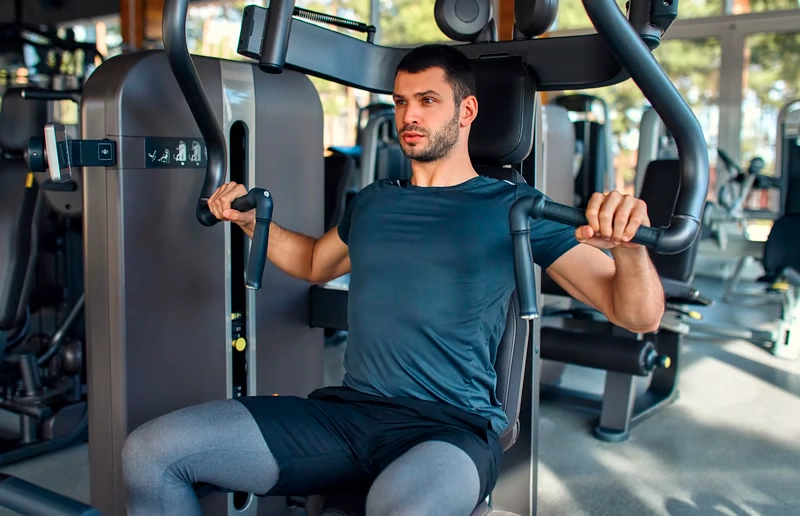
For the widest overall benefit, pair aerobic exercise with strength training. If you can pick just one activity, brisk walking is a great place to begin.
It’s simple, easy to adjust, and practical for many people. Still, your best choice is a safe activity you enjoy enough to do again and again.
No single exercise tops every measure of physical fitness. Running may build heart and lung fitness faster than lifting weights. Resistance work does more for muscle strength.
Mobility work helps you move through a useful range. Your goal decides what “best” means.
Why can’t one movement meet every fitness goal?
Your body adapts to the work you give it. Walking asks your heart, lungs, and blood vessels to carry oxygen to working muscles. A squat asks your hips, knees, trunk, and leg muscles to make force.
Stretching places a different demand on flexibility.
So, hunting for best exercise can send you down the wrong path. Exercise is more like food than medicine from one bottle. Different forms offer different benefits.
A review of 88 articles involving adults with overweight or obesity found that aerobic, resistance, combined, and high-intensity interval training improved cardiorespiratory fitness. The meta-analyses covered 66 studies and 3,964 people. Average VO2max rose by 3.82 mL/kg/min.
Resistance training produced smaller gains in this measure than aerobic work, while high-intensity interval training produced slightly greater gains than aerobic training.
That result doesn’t make resistance exercise worse. It means VO2max rewards the type of training that targets it most closely. Strength needs another kind of work. Current fitness research supports this conclusion.
For broad health, the clearest answer is a mix of cardio and resistance exercise.
Why is brisk walking such a useful single choice?
Brisk walking is easy to start. It needs little skill, fits into daily life, and gives you clear control over pace and distance. You can begin with ten minutes, slow down when needed, or pick a flat route.
Those features make regular practice more likely.
A brisk pace should lift your breathing while still letting you speak in short sentences. It should feel purposeful, not like a lazy stroll. Once normal walks feel easy, hills and faster bursts can add effort.
Walking also solves a problem that many exercise rankings miss: access. A movement has little value when pain, cost, travel, fear, or tricky technique stops you from doing it. The exercise you finish each week beats the ideal program you avoid.
Picture someone who picks hard running because it burns more energy per minute. Sore shins make that person quit after four sessions. Someone else walks after lunch five days each week and keeps going for six months.
The second plan creates far more useful training because it survives real life.
Walking still has limits. It won’t build as much strength as progressive resistance work. It may also become too easy to bring further fitness gains unless you raise the pace, distance, incline, or duration.
Treat it as a strong base, not the full answer for every goal.
What does aerobic activity add to your body?
Aerobic exercise uses large muscle groups in repeated movement over time. Brisk walking, cycling, jogging, and swimming are common forms. This work trains the heart to pump blood and helps working muscles use oxygen.
The main result is better cardiovascular fitness. Daily tasks may use a smaller share of your total capacity, so stairs and longer walks can feel easier. You also gain more freedom for active work, travel, sport, and family life.
Aerobic sessions don’t need to leave you wiped out. A steady effort you can control often works better for building a routine that lasts. Hard intervals can help, but they take more effort and may need extra recovery.
Research comparing six endurance sessions with matched calorie use found that the sessions still placed different metabolic, mechanical, cardiorespiratory, and personal demands on participants. Existing fitness and biological sex could also affect the response. Calories burned tell only part of the story.
Comfort, recovery, joint load, and the urge to come back matter too.
What does resistance work provide that cardio misses?
Strength training makes your muscles push or pull against resistance. That resistance may come from body weight, machines, bands, dumbbells, or barbells. The aim is to make a movement hard enough that your body must adapt.
Stronger muscles help with lifting, carrying, climbing, getting up from a chair, and controlling your body. Resistance work also loads bone. This matters when bone strength and bone density are goals, though results depend on the exercise, load, progress, and person doing it.
A squat is useful because it trains a movement found in daily life. A deadlift pattern trains force from the hips and legs while you hold a load. Neither exercise is a must.
A supported sit-to-stand, leg press, hip hinge with a light weight, or another safe choice can train similar skills.
The key is progressive overload. As your body adapts, you slowly increase the demand. You might add a little weight, do another repetition, improve control, or try a harder version.
Progress should be slow enough to keep your technique sound.
More weight isn’t always better. A load that ruins your form or causes sharp pain is too much for that session. The goal is useful stress followed by recovery, not a fight with the equipment.
How should cardio and strength fit together?
A simple week can have several aerobic sessions, with resistance work on separate days. You can also put both into one session. The exact split matters less than covering both forms and repeating them often enough to improve.
A network meta-analysis of 45 randomised trials included 3,566 adults living with obesity. Every assessed exercise approach performed better than no exercise, although weight loss from exercise was generally modest. Programs that combined high-intensity aerobic work with high-load resistance training produced benefits across relevant fitness and body-composition measures.
This backs mixed training when broad improvement is the goal. It doesn’t mean every beginner should start with high intensity or heavy loads. That would push the finding beyond what it proves.
The practical lesson is simple: include one form of aerobic work and one form of resistance work at levels that suit your current ability.
For a new exerciser, that could mean brisk walking on most active days and two short full-body strength sessions each week. A strength session might include a sit-to-stand, wall push-up, supported row, and hip-based movement. Begin with loads you can control.
Someone with more experience may use faster cycling, running intervals, heavier resistance, or extra training days. The tools change, but the structure stays the same: train the heart and lungs, then train force.
How do you choose an activity you will keep doing?
Start with your main goal. If you want to walk farther without getting tired, pick an aerobic activity that matches that demand. If you want to get stronger, use resistance.
For broad health and physical fitness, combine them.
Next, see if the plan fits your week. A forty-minute session that rarely happens is less useful than twenty minutes you can protect. Count travel, setup, shower time, and recovery.
These hidden costs often decide whether a plan lasts.
Then watch how your body responds. Normal effort can include warmer skin, faster breathing, and tired muscles. Sharp pain, chest pressure, fainting, or severe shortness of breath is different.
Stop the session and seek suitable medical help when serious symptoms occur.
Enjoyment has a practical role too. You don’t need to love every minute, but the activity should feel acceptable enough to repeat. Music, a walking partner, a class, outdoor routes, or visible progress can make that easier.
Here’s one overlooked point: the best exercise can change. Walking may be your best starting activity. Months later, cycling might help you train harder with less joint stress, while strength work may become your main need.
Choosing again is a sign of progress, not failure.
How can you tell whether your plan is working?
Track the result linked to your goal. For aerobic fitness, record walking time, distance, pace, or how hard a set route feels. For strength, record the movement, load, repetitions, and control.
For flexibility, note whether a useful task gets easier instead of chasing an extreme range.
Use more than body weight to judge success. Exercise-led weight loss is often modest. A steady scale can hide better fitness, greater strength, smoother movement, or a growing ability to handle daily tasks.
Check progress over several weeks. Daily performance shifts with sleep, stress, food, temperature, and soreness. One poor session says little.
A pattern of falling performance, lasting pain, or constant tiredness tells you to cut the demand and check the plan.
Recovery is part of training. Muscle adapts after a session when it gets time and fuel to repair. More work can slow progress if it takes away that recovery.
What mistakes make a good exercise plan fail?
The first mistake is starting at the level you hope to reach. Sudden long runs, hard intervals, or heavy lifting create more soreness and strain than a beginner needs. Start below your limit and build as your body adapts.
The next mistake is making calorie burn the main score. Two sessions can use similar energy yet feel very different and place different demands on the body. A high calorie number can’t tell you whether a session suits your joints, goal, skill, or recovery.
Another mistake is swapping exercises so often that you can’t measure progress. Variety can keep training fresh, but a steady set of core movements shows whether your capacity is growing. Keep the main work stable for several weeks before you judge it.
People also treat flexibility as a replacement for strength or cardio. Mobility work can help you reach and control positions, but it doesn’t place the same demand on your heart, lungs, muscles, or bones. Give it a supporting role unless range of motion is your main limit.
Finally, don’t copy an advanced program without its background. The workout you see is just one point in someone else’s training history. Your plan should begin with your current health, skill, and capacity.
When should you get help before starting?
Get medical guidance if you have symptoms during activity, a recent injury or operation, or a health condition that affects safe exercise. Pregnancy, major health changes, and medicines that alter heart rate or balance can also change the right starting point.
A qualified trainer or exercise professional can help adjust movements, choose a starting load, and teach technique. That support helps when you feel unsure in a gym or pain limits common exercises.
Exercise should test your capacity without brushing off warning signs. Safe doesn’t mean effortless. It means the demand fits your body and rises in controlled steps.
What should you do this week?
- Choose one form of aerobic exercise you can repeat, with brisk walking as the default starting option.
- Schedule two short strength sessions using controlled movements for the main muscle groups.
- Write down time, distance, repetitions, or load so you can see progress.
- Increase one part of the plan gradually when the current level feels manageable.
Take one brisk walk today, then put your next strength session in your calendar before the day ends.
Frequently asked questions about What is the no. 1 best of exercise?
What is the #1 exercise?
Walking is the #1 exercise for most people because it is simple, safe, and free. The best choice for you depends on your health and goals.
What are the top 3 exercises?
Walking, squats, and push-ups are three of the best exercises. Together, they help your heart, legs, arms, and chest stay strong.
What is the greatest exercise of all time?
Walking may be the greatest exercise of all time because almost anyone can do it. It supports heart health, fitness, and a healthy weight.
What is the best exercise in the world?
Walking is one of the best exercises in the world because it is easy to start and needs no equipment. The best exercise is one you enjoy and can do often.
Sources
- van Baak MA, Pramono A, Battista F, Beaulieu K, Blundell JE, Busetto L, et al. (2021) “Effect of different types of regular exercise on physical fitness in adults with overweight or obesity: Systematic review and meta-analyses” Obesity reviews : an official journal of the International Association for the Study of Obesity. PMID: 33939229
- O’Donoghue G, Blake C, Cunningham C, Lennon O, Perrotta C (2021) “What exercise prescription is optimal to improve body composition and cardiorespiratory fitness in adults living with obesity? A network meta-analysis” Obesity reviews : an official journal of the International Association for the Study of Obesity. PMID: 32896055
- Stöggl TL, Strepp T, Blumkaitis J, Schmuttermair A, Wahl P, Haller N (2023) “Unraveling the mystery of isocaloric endurance training – Influence of exercise modality, biological sex, and physical fitness” Metabolism: clinical and experimental. PMID: 37169172