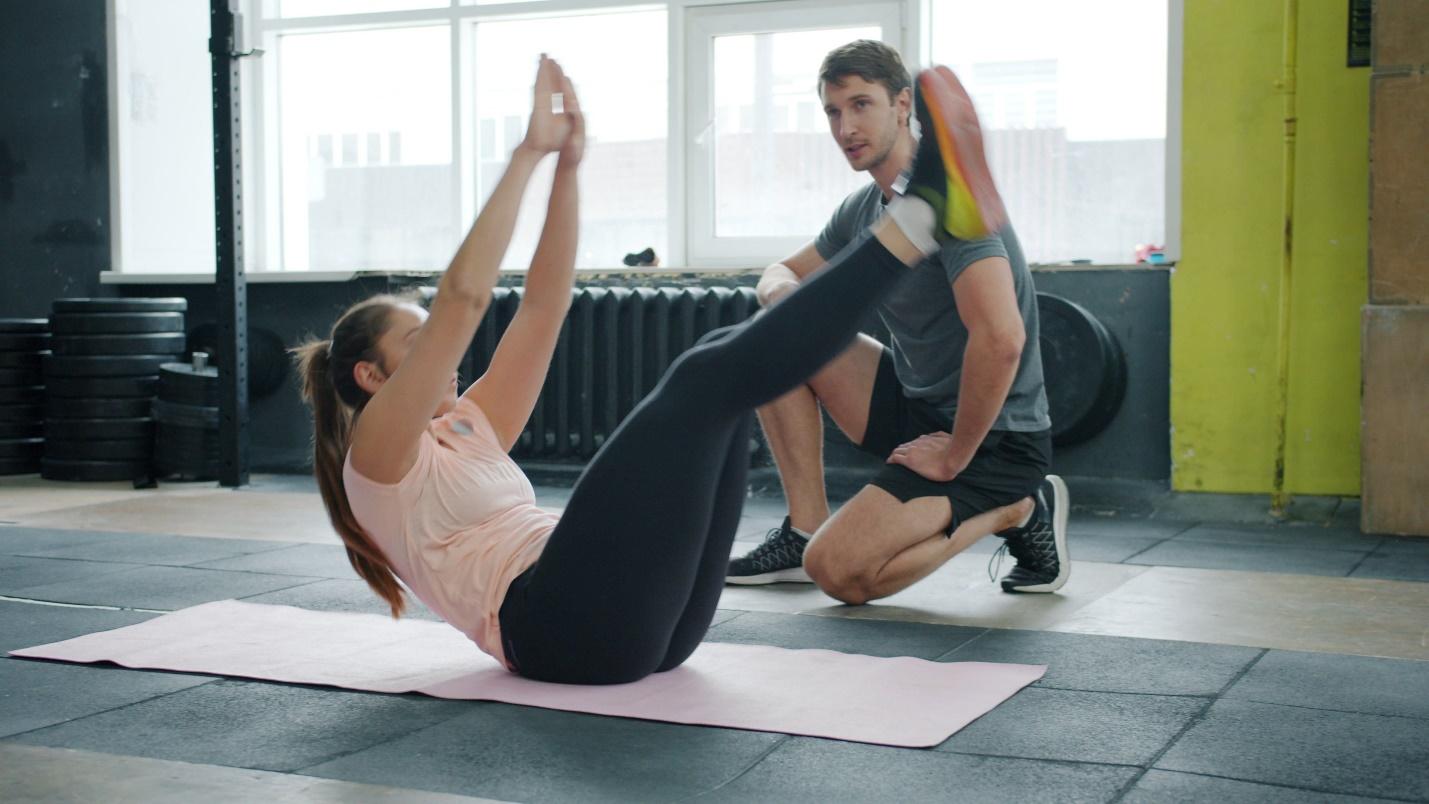
For general health, the best choice is a plan that combines aerobic exercise with strength training. Aim for 150 to 300 minutes of moderate aerobic activity each week, or 75 to 150 minutes at a vigorous level.
Add strength training on at least two days. This mix builds heart fitness, protects muscle, and makes everyday movement easier.
Your goal still decides which type needs more time. strength training first when strength and keeping muscle matter most. Pick aerobic exercise when endurance and heart fitness top the list. Combine both for the widest health benefit.
What does “effective” mean for your body?
An exercise works when it causes the change you need. Your body responds to the demands you place on it. Walking, cycling, and swimming make the heart, lungs, and blood vessels deliver oxygen during repeated movement. Resistance exercise makes muscles and connective tissue handle force.
Those demands lead to different results. A long ride may build endurance without adding much strength. Heavy lifting may increase force without getting you ready for a long run. Neither exercise is poor. The training simply needs to match the result you want.
A 12-week trial involving 64 adults found that each training mode helped different cardiovascular risk factors and body measures. No mode gave the best result across every outcome. That backs a simple rule: name the result before judging the exercise.
Use a clear measure. Someone training for cardiovascular fitness might track walking pace, cycling distance, or recovery after climbing stairs. Someone training for strength might track the load used for a squat exercise.
Want easier daily movement? Track how well you rise from a chair, carry shopping, or work without tiring.
Why does a combined plan cover more needs?
A combined plan gives your body two different signals. Aerobic work improves its ability to keep going. Resistance work helps it produce force and hold on to muscle. Together, they support more parts of physical fitness than either type can cover alone.
Evidence from 160 older adults with obesity shows why this matters in daily life. Over six months, combined training improved physical performance by 21%. Aerobic training improved it by 14%. The combined group gained wider function because the program trained both endurance and force.
A separate trial followed 48 inactive men with hypertension. Each exercise mode improved blood pressure, fitness, and body composition, while combined training gave the strongest overall set of results. This doesn’t prove that a mixed plan wins for every person or every measure. It shows that training more than one physical system can bring wider gains.
Mixing the modes doesn’t mean packing every workout with cardio and weights. Put them on separate days if that suits you. Or do a short strength session after easy cardio. The weekly pattern matters more than squeezing both into every workout.
When should strength work take priority?
Put strength training first when your main goal is greater force, more muscle, or protection against age-related muscle loss. It also needs extra attention when weak legs, poor grip, or trouble lifting objects gets in the way of daily life.
Resistance exercise makes a muscle produce force against a load. That load may come from a machine, free weights, resistance bands, or your own body weight. The muscle changes when the demand is hard enough and repeated over time.
A review of 42 trials involving 3,728 people with sarcopenia supported resistance exercise for improving strength and physical function. Sarcopenia means the loss of muscle mass and function linked with ageing. The review looked at older people with that condition, so its findings aren’t a direct ranking for every adult. Still, it shows why resistance work has a clear role in keeping useful strength.
The squat and deadlift can train lots of muscle, but their names alone don’t make them effective. A movement only works when the load suits the person and the form can be repeated safely. A supported squat to a bench may help a beginner more than a heavy barbell squat. A raised deadlift may suit someone who can’t yet reach the floor with control.
Start with movements that cover the main actions of daily life. three of the best exercises during the week. Use a load that lets you keep steady form. Raise the demand only after you can finish the planned work with control.
When should aerobic work receive more time?
Give aerobic exercise the larger share when you want better endurance, easier movement over time, or improved cardiovascular fitness. Brisk walking, running, cycling, rowing, and swimming can all work. The best one lets you reach the needed exercise intensity without pain or poor control.
At moderate intensity, you can usually speak in short sentences while breathing much faster. Vigorous work makes talking harder and speeds up your breathing far more. These quick checks help when you don’t have a heart-rate monitor or can’t trust its reading.
Swimming can suit people who want aerobic work with less impact on their feet and knees. But it takes skill and access to a pool. Walking may be easier to repeat because there’s little setup. Cycling can support a high training volume with less impact, though bike fit affects comfort.
Don’t judge aerobic work by sweat alone. Heat, clothing, and hydration can change how much you sweat without changing the training effect. Look at pace, breathing, duration, and how well you recover after the session.
How much effort creates a useful training effect?
Exercise must be hard enough to create change but manageable enough to repeat. Work that’s too easy soon stops sending a strong signal. Work that’s too hard can spoil your form, slow recovery, and make the next session less useful.
For aerobic sessions, change the speed, resistance, hills, or duration. A beginner might start with ten-minute walks and add time before adding speed. Someone with a stronger base may add short, faster bursts to an easier session.
For strength work, use progressive overload. That means raising the demand as your body adapts. Add a small amount of weight, do another repetition, or use a harder movement range. Change one thing at a time so you can see how your body reacts.
More work isn’t always better. Extra sets lose value when speed and control fall apart. Cardio works the same way. Hard intervals in every session can leave you too tired to finish enough steady work.
Consistency gives the program its value. A hard plan followed for two weeks creates less change than a suitable one followed for months. Pick a weekly load you can recover from and repeat.
How can you match training to a real-life need?
Start with the task you want to improve. Then find the physical limit within that task. This works better than picking an exercise just because it looks hard.
Think of someone who gets breathless walking uphill but can lift shopping with no trouble. Aerobic work should get more time because endurance is the main limit. Strength work should stay in the week to protect muscle and support the joints.
Now picture someone who can walk for an hour but struggles to rise from a low chair. More walking may do little for that weak point. Loaded sit-to-stand practice and other resistance exercises offer a more direct route because they train the force that task needs.
A third example is an adult who wants more energy for work and enough strength for jobs at home. A mixed plan fits because both lasting effort and force matter. This choice is based on the needs of those tasks. It isn’t proof that one exact routine suits everyone.
Mental health may shape the choice too. A 2025 systematic review studied aerobic and resistance exercise for depression and anxiety. It included 32 trials with 3,243 participants, with 26 trials entering the meta-analysis.
Across 25 studies, exercise produced a pooled benefit for depressive symptoms of SMD −0.97. The review supports exercise as a helpful option, but it doesn’t show one universal mode for every mental health need.
Should inflammation decide which mode you choose?
No. Current evidence doesn’t give a sound reason to rank aerobic work against resistance training using inflammatory outcomes alone. A 2025 review compared the inflammatory responses of the two modes, but the results weren’t enough for a clear ranking.
This is where many exercise comparisons go wrong. They use one biological marker to name a winner, even when the evidence can’t support that claim. A marker measured in blood may matter in research, but it can’t replace results a person can feel and track, such as walking capacity, strength, blood pressure, or daily function.
Let known training effects guide your choice. Choose aerobic work for endurance. Choose resistance work for strength and muscle. Use both when your goal includes general health and useful movement. Personalized fitness guidance can help you select the right approach for your needs.
What can make a sound program ineffective?
The biggest problem is a mismatch between the plan and the person. Painful movements, an unrealistic schedule, and big jumps in exercise intensity can cut the amount of good training you finish. The exercise itself may be sound while the dose is wrong.
Changing the program too often can also hide progress. Your body needs the same demand more than once. If every workout uses different exercises and loads, it’s hard to tell whether strength or fitness is getting better.
Another mistake is using soreness as proof. Soreness often rises after a new movement or a quick jump in volume. It doesn’t show how much useful change took place. Track performance instead.
Stop the session if you get chest pain, feel faint, or have severe shortness of breath that seems out of line with the effort. Sudden weakness or sharp pain also needs attention. Get urgent medical care for severe or lasting symptoms.
People with a known health condition, recent surgery, or major limits in movement should ask a qualified health professional how to start safely.
How should you build your week?
Set the aerobic target first. Spread 150 to 300 minutes of moderate activity through the week, or do 75 to 150 minutes of vigorous work. A mix of both can reach the target too.
Put strength sessions on at least two days. Train the main movement patterns with a load you can control. Leave enough recovery time before working the same muscles hard again.
A simple week could include moderate aerobic activity on several days and full-body resistance sessions on two non-consecutive days. Keep one or more aerobic sessions easy enough that they don’t lower the quality of your strength work. If one goal matters more, do its key sessions while you’re fresh.
Review the plan after four to six weeks. Use the measure linked to your goal. Check whether your walking pace improved, your working load rose, or daily tasks got easier. If progress has stalled, change the dose before replacing the whole program.
What should you do now?
Pick one aerobic activity you can repeat, schedule two strength sessions, and follow that plan this week.
Frequently asked questions about What exercise is the most effective?
What is considered the most effective exercise?
The most effective exercise is one you enjoy and can do often. Brisk walking is a great choice because it helps your heart, muscles, and mood.
What are the only 5 exercises you’ll ever need?
Five useful exercises are squats, push-ups, rows, lunges, and planks. Together, they work most major muscles and can be made easier or harder.
What are the top 3 exercises?
Squats, push-ups, and rows are three of the best exercises. They build strength across your legs, chest, back, arms, and core.
Which exercise is the king of all exercises?
The squat is often called the king of all exercises. It works many large muscles and builds strength for daily movement.
Sources
- Villareal DT, Aguirre L, Gurney AB, Waters DL, Sinacore DR, Colombo E, et al. (2017) “Aerobic or Resistance Exercise, or Both, in Dieting Obese Older Adults” The New England journal of medicine. PMID: 28514618
- Ho SS, Dhaliwal SS, Hills AP, Pal S (2012) “The effect of 12 weeks of aerobic, resistance or combination exercise training on cardiovascular risk factors in the overweight and obese in a randomized trial” BMC public health. PMID: 23006411
- Banyard H, Edward KL, Garvey L, Stephenson J, Azevedo L, Benson AC (2025) “The Effects of Aerobic and Resistance Exercise on Depression and Anxiety: Systematic Review With Meta-Analysis” International journal of mental health nursing. PMID: 40432290
- Shen Y, Shi Q, Nong K, Li S, Yue J, Huang J, et al. (2023) “Exercise for sarcopenia in older people: A systematic review and network meta-analysis” Journal of cachexia, sarcopenia and muscle. PMID: 37057640
- Alemayehu A, Teferi G (2023) “Effectiveness of Aerobic, Resistance, and Combined Training for Hypertensive Patients: A Randomized Controlled Trial” Ethiopian journal of health sciences. PMID: 38784482
- (2025) “Evaluating inflammatory outcomes: a systematic review and meta-analysis of aerobic versus resistance exercise interventions” The Journal of the International Society of Physical and Rehabilitation Medicine. DOI: 10.1097/ph9.0000000000000082