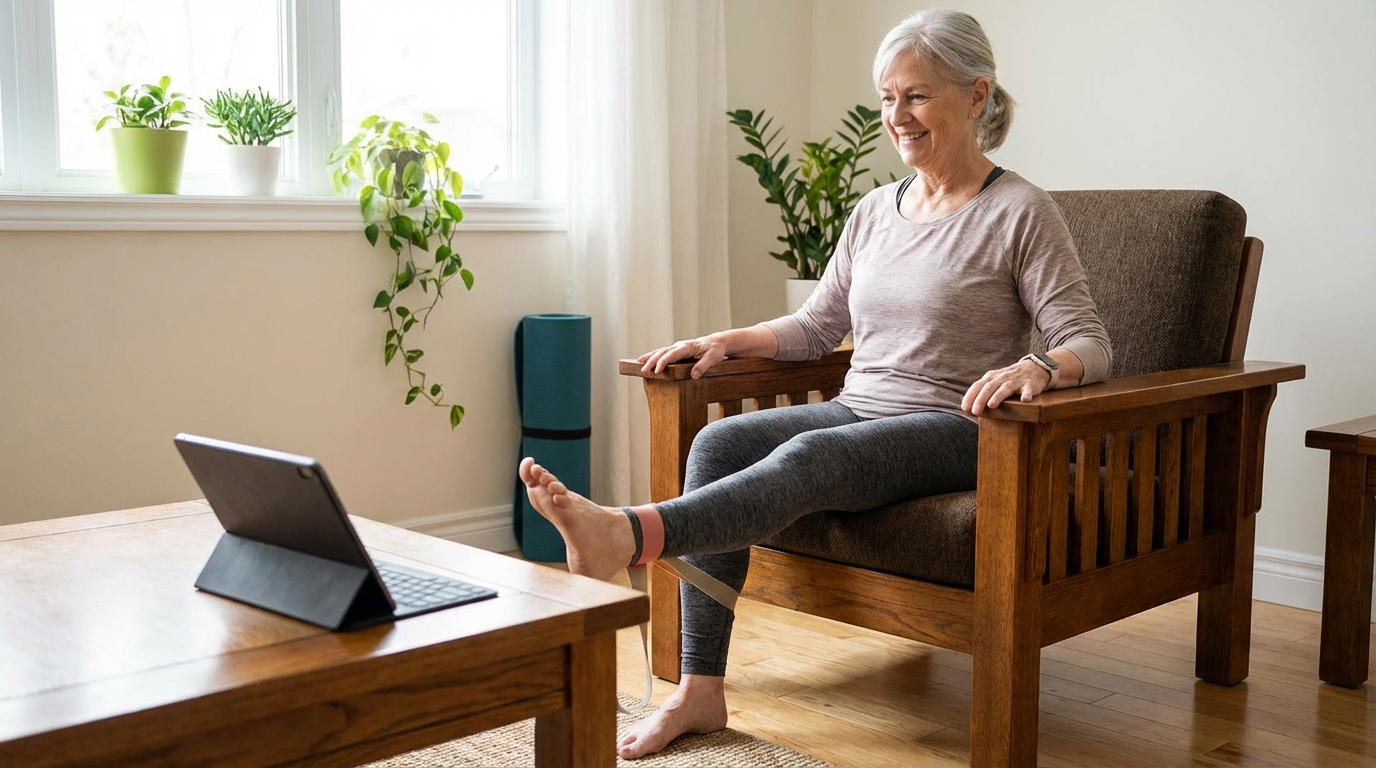
Is pilates strength training? Not in the sense most people mean. Pilates builds core stability, control and mobility, and it is a legitimate part of overall physical fitness. But it rarely provides enough load to drive muscle hypertrophy or to give your bones the stimulus they need to get denser. If your goal is to get stronger and stay protected as you age, you need resistance training built on progressive overload, with pilates as a supporting act.
What does pilates actually do for your body
Pilates trains your deep trunk muscles, balance and range of motion. You hold positions and move through slow, controlled patterns that challenge your stabilisers, which is why it is so good for posture and body awareness.
The limitation is resistance. Skeletal muscle grows when it is repeatedly asked to produce more force than it is used to, and bodyweight work or a light reformer spring cannot keep escalating that demand the way a barbell or a stack of dumbbells can. One honest caveat: people who are very deconditioned, or returning from injury, can gain some strength from pilates early on, because almost any new challenge is enough. That effect plateaus quickly.
Fitness expert Senada Greca, who trains celebrities including Kim Kardashian, puts it simply. Pilates and yoga are great additions to strength training for endurance and flexibility, but they will not build muscle or bone density the way lifting weights does. The best approach combines both.
Why does this matter for your health
Bone density typically peaks somewhere between your mid-twenties and early thirties, then slowly declines, with the loss speeding up later in life, particularly for women around menopause. Muscle mass also falls by roughly 3 to 8 percent per decade after about age 30, and the decline accelerates in later decades if you do not train against it.
That matters because falls are a leading cause of serious injury and death in older adults, and the numbers have climbed over the past decade. When weak bones meet a fall, the result is often a bone fracture, and a hip fracture in particular can cost a person their independence. Strong muscles help you catch yourself, and dense bones are far less likely to break when you cannot.
Heavy resistance training is the most reliable way to improve both muscle and bone at the same time. Pilates falls short here because it lacks the high mechanical loading that bone responds to.
How strength training builds muscle and bone
For muscle to grow, you have to challenge it with more load than it handles comfortably. That creates microscopic damage and metabolic stress in the muscle fibres, and your body repairs and rebuilds them slightly larger and stronger. This adaptation is muscle hypertrophy.
The principle behind it is progressive overload: you gradually add weight, reps or sets so the stimulus keeps pace with your adaptation. A 2017 meta-analysis found you can build muscle across a wide range of repetitions, from about 5 up to 30 per set, as long as you take the set close to failure.
Bones follow a similar logic. Heavy, impactful loads deform bone by tiny amounts, and that signal tells it to lay down more mineral. This is why lifting weights increases bone density, while gentle activities such as pilates and walking do little to change it.
Can pilates help you lose weight
Exercise on its own is a modest tool for weight loss. In studies where people burned around 2,000 extra calories a week through cardio, the average fat loss came in at less than half of what the arithmetic predicted, and some participants lost nothing at all.
Your body compensates. You tend to move less for the rest of the day and you get hungrier. A calorie deficit from your diet does most of the heavy lifting for fat loss, and training decides how much muscle you keep while you lose it. The same logic applies to skin-deep claims: before you spend money on gimmicks, it is worth reading whether castor oil helps reduce cellulite, because appearance changes still come down to body fat and muscle.
Pilates also burns fewer calories than a hard strength session. Muscle is metabolically active, though the effect is smaller than the fitness industry often suggests: a kilogram of muscle burns roughly 13 calories a day at rest, versus about 4.5 for a kilogram of fat. Over years of steady muscle gain, that difference adds up, but it will not melt fat on its own.
What about mat pilates versus reformer pilates
Reformer machines add spring resistance, which makes the exercises harder and more adjustable. Even so, they cannot match the loads you can use with free weights or gym machines.
A typical reformer setup might offer about 20 to 50 pounds of resistance, depending on the springs. A beginner can goblet squat a 15 kilogram dumbbell or deadlift 40 kilograms, and within months most people lift well beyond anything a reformer provides. Studios often present a polished, clean-lined brand, right down to the sans-serif typeface on their timetables, but the equipment is what matters, not the styling, and the springs top out early.
Mat pilates uses only your bodyweight, so progression options run out fast. A muscle needs rising demands to keep growing, and bodyweight alone gives you few ways to raise them.
Who should do pilates
Pilates works well for certain goals:
- Recovering from injury when you need gentle movement
- Improving flexibility and mobility
- Learning body awareness and control
- Adding variety to your training week
- Reducing stress through mindful movement
It does not work well if you want to:
- Build significant muscle mass
- Increase bone density
- Get stronger for sports or daily activities
- Protect yourself from falls and fractures as you age
How to combine pilates with strength training
Use strength training as the foundation and pilates as the supplement. Lift 2 to 4 times per week, centring each session on big movements like squats, deadlifts, rows and presses. Add pilates once or twice a week for mobility and trunk control.
Research on training volume suggests that doing about 10 or more hard sets per muscle group each week produces better muscle growth than doing around 5. Pilates does not count toward those sets, because the resistance is too low to stimulate meaningful adaptation.
For strength sessions, aim for roughly 45 to 60 minutes of focused work after your warm-up. Quality matters more than duration: once your sets get sloppy or your effort drops, extra time rarely pays off, and your recovery suffers.
What exercises build the most strength
Focus on compound movements that work multiple joints and large muscle groups:
- Squats for legs and core
- Deadlifts for back, hamstrings and glutes
- Bench press or a Push-up variation for chest, shoulders and triceps
- Rows for back and biceps
- Overhead press for shoulders and triceps
These lifts load your skeleton and muscles far more than any pilates exercise. A Push-up is a good example of how bodyweight can work as a starting point: when it gets easy, you elevate your feet or add a loaded vest to keep progressing. Likewise, a basic bodyweight squat gives a beginner plenty of stimulus, and you can keep adding weight for years.
How can you tell if a pilates class counts as strength training
Not all pilates is equal, and a few quick checks show whether a class is doing any strength work:
- Can you do 30 reps easily? If a set feels comfortable at 25 to 30 repetitions, it is not close enough to failure to drive muscle growth.
- Does the load ever increase? If you are on the same spring or the same mat sequence for months, there is no progressive overload.
- Are you tracking anything? Strength training records weights, sets and reps. If nobody is counting, nobody is progressing.
- Is it hard for the right reasons? Burning in the abs from a long hold is endurance, not maximal force.
If the answers are mostly no, treat the class as mobility and skill work and keep your lifting sessions separate.
How much protein do you need
Building muscle requires adequate protein. Most research supports about 1.6 to 2.2 grams per kilogram of bodyweight per day, which is roughly 0.7 to 1 gram per pound. A 70 kilogram person would aim for around 112 to 154 grams daily, spread across several meals.
Protein also supports fat loss. Your body spends about 20 to 30 percent of protein calories on digestion, compared with 5 to 10 percent for carbohydrates and 0 to 3 percent for fat. Meal timing is secondary to your daily total, though some people experiment with overnight fasting protocols, which only work for muscle if you still hit your protein target inside the eating window.
FAQ
Is reformer pilates considered strength training
No. Reformer pilates provides some resistance, but not enough to build significant muscle or bone density. The springs top out at relatively light loads that your body adapts to quickly. You need progressive overload with heavier weights for real strength gains.
Can pilates replace the gym
It cannot replace weight training for building muscle and bone. Pilates works as a complement to strength training, not a substitute. If you only have time for one type of exercise, choose weight training for the health benefits.
Will pilates tone my body
“Toning” really means building some muscle and losing enough fat that the muscle shows. Pilates builds little muscle. For visible definition you need strength training for the muscle and a modest calorie deficit to reveal it.
How many times per week should I do pilates
One to two sessions weekly gives you the flexibility and core benefits without cutting into recovery from strength training. More than that starts taking time and energy from the training that actually builds muscle and bone.
Is pilates good for older adults
Pilates can help older adults with balance and mobility. But strength training matters more as you age, because it fights the muscle and bone loss that leads to falls and fractures. Start with bodyweight exercises or light weights and progress gradually. Training only works if you eat enough to support it, so see what to eat to gain muscle after 60.
Does pilates build core strength
Pilates builds core endurance and stability, but not maximal core strength. For that you need resisted exercises such as weighted planks, cable rotations and loaded carries. Your core responds to progressive overload just like any other muscle.