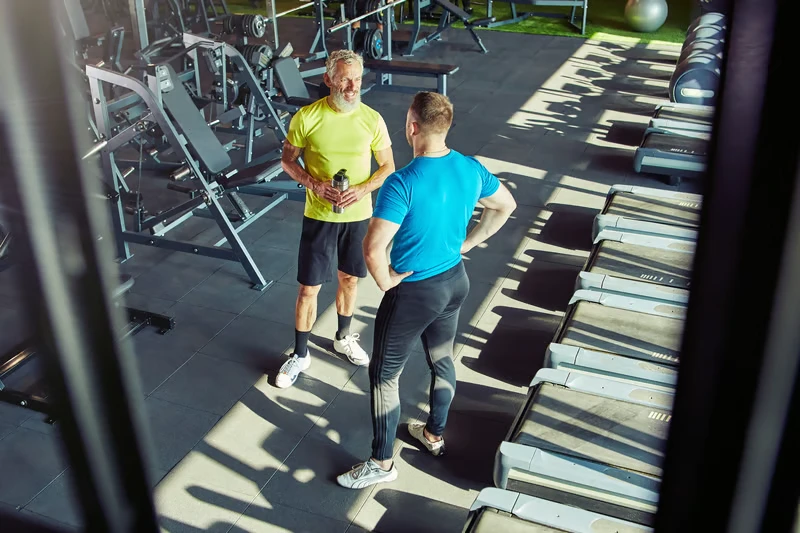
A personal trainer in Melbourne typically costs $80 to $130 for a 60-minute one-on-one session in 2026, with most people paying $100 to $120. Budget and newer trainers start around $60, while senior and specialist coaches charge $130 to $200 or more. Semi-private sessions cut the cost to roughly $40 to $70 per person.
Two trainers with the same qualifications can still charge very different rates, because location, specialisation, demand and session format all move the price. If you want a trusted personal trainer in Melbourne, this guide shows what to expect, what drives the cost, and how to get value for your money. Trainers around the Melbourne central business district tend to sit at the upper end of these ranges, since rent and client demand are both higher there.
How Much Does a PT Session Cost in Melbourne?
The average PT in Melbourne sits between $80 and $150 per session for a standard 60-minute workout. Most people pay around $100 to $120 per session when working with a qualified trainer at a commercial gym or private studio.
Here is a simple breakdown of what the market looks like right now:
- Budget trainers or newer coaches: $60 to $80 per session
- Mid-range qualified trainers: $80 to $130 per session
- Senior or specialist trainers: $130 to $200 per session
- Elite performance coaches: $200 and above per session
These prices are for one-on-one, 60-minute sessions. Semi-private training, where you share a session with one or two other people, usually costs $40 to $70 per person per session.
Is It Cheaper to Buy PT Sessions in Bulk in Melbourne?
Yes, buying in bulk almost always saves you money. Most trainers in Melbourne offer package pricing that drops the per-session cost by 10 to 25 percent compared to paying casually.
A typical bulk pricing structure looks like this:
- Single casual session: $100 to $130
- 5-session pack: $90 to $115 per session
- 10-session pack: $80 to $105 per session
- 20-session pack: $70 to $95 per session
The savings are real. A 10-session pack at $85 per session versus $110 casual saves you $250 over those same 10 sessions. That is a meaningful difference over a year of training.
One thing to watch out for is expiry dates on packages. Some trainers put a 3-month or 6-month expiry on bulk packs. Read the terms before you commit, especially if you travel or have an unpredictable schedule.
How Much Does a Personal Trainer at a Melbourne Gym Charge?
Gym-based personal trainers in Melbourne generally charge between $80 and $140 per session. The gym itself takes a cut of that fee, which is why gym-based trainers sometimes charge more than independent trainers to cover that overhead.
At large commercial gym chains like Fitness First, Goodlife, or Anytime Fitness, you can expect to pay $90 to $130 per session. Boutique gyms and private studios often charge $100 to $160 per session because the environment is more exclusive and the equipment is more specialised.
Some gyms bundle personal training into membership packages. These deals can look attractive but often lock you into a specific trainer and a set number of sessions per month. Calculate the actual per-session cost before assuming it is a good deal.
One advantage of gym-based training is access to equipment. If your program centres on strength training, a full rack, cable machines and a range of free weights are built into the session price, with no extra hire fees.
Are Mobile Personal Trainers in Melbourne More Expensive?
Mobile personal trainers in Melbourne are not always more expensive, but the pricing model is different. A mobile trainer comes to your home, a local park, or a community space. You pay for their time and travel, not for gym access. If you want to see how mobile personal training is set up in practice, check the options before you compare quotes.
Mobile PT sessions in Melbourne typically cost $80 to $140 per session. That range overlaps heavily with gym-based training. The difference is what you get for that price.
With a mobile trainer you get:
- Convenience, no commute to a gym
- Privacy, training in your own space
- Flexibility on location and timing
- Sessions designed around minimal equipment
The trade-off is equipment. A mobile trainer works with what you have or what they bring, usually resistance bands, kettlebells, and bodyweight movements. If your goal requires heavy barbell work or specialised machines, a mobile trainer is not the right fit regardless of price.
Some mobile trainers charge a travel fee on top of the session rate if you live outside their standard service area. Ask about this upfront.
What Factors Affect the Cost of a PT Session in Melbourne?
Understanding how much a PT session costs in Melbourne requires knowing what actually drives the price. There are five main factors.
1. Trainer Experience and Qualifications
A trainer with a Certificate III and IV in Fitness and two years of experience will charge less than a trainer with a degree in exercise science, ten years of experience, and specialisations in strength and conditioning or injury rehabilitation. Experience costs more because it delivers better results faster.
2. Location Within Melbourne
Trainers operating in the Melbourne central business district, South Yarra, Toorak, or Brighton charge more than trainers in outer suburbs. The cost of living and the client base in those areas supports higher pricing. A trainer in Frankston or Werribee will generally charge 15 to 25 percent less than the same calibre trainer in St Kilda or Fitzroy.
3. Session Length
Most quoted prices are for 60-minute sessions. Some trainers offer 45-minute or 30-minute sessions at a lower price point. A 30-minute session is not half the price of a 60-minute session because the trainer still has to travel, set up, and manage their schedule around it. Expect 30-minute sessions to cost 60 to 70 percent of the 60-minute rate.
4. Specialisation
Trainers who specialise in specific populations or goals charge a premium. This includes trainers who work with pre and postnatal clients, people recovering from injury alongside a physical therapy provider, older adults with complex health needs, or competitive athletes. That specialisation requires extra education and carries more professional responsibility, so the price reflects that.
5. Demand and Reputation
A trainer with a full client roster and a waitlist can charge more. A trainer building their business will price more competitively to attract clients. This is basic supply and demand. A highly sought-after trainer with strong results and testimonials commands a higher rate because the market supports it.
What Will Personal Training Cost You Per Month in Melbourne?
A per-session price is hard to budget around, so it helps to convert it into a monthly figure. The table below uses a mid-range rate of $100 per one-on-one session and a $55 semi-private rate, averaged over a year, and shows approximate monthly spend.
| Frequency | One-on-one at $100 | Semi-private at $55 |
|---|---|---|
| 1 session per week | About $430 per month | About $240 per month |
| 2 sessions per week | About $870 per month | About $480 per month |
| 3 sessions per week | About $1,300 per month | About $720 per month |
Bulk packs lower these figures by 10 to 25 percent. A common compromise is one one-on-one session a week for programming and technique, plus self-directed gym work in between. That keeps the spend near $430 per month while still giving you expert coaching on your key lifts.
Budgeting this way also exposes the real cost of changing goals. Someone starting strength training from scratch often benefits from two sessions a week for the first two months, then drops to one once they can run their own program safely. For a full view of current rates and bundles, review the Fitness Image personal training prices and packages, and compare them with personal trainer costs across Australia to see where Melbourne sits nationally.
Can You Claim Personal Training Costs on Medicare or Private Health in Melbourne?
Medicare does not cover personal training costs in Australia. Personal training is not classified as a medical service under the Medicare Benefits Schedule, so there is no rebate available through Medicare regardless of your health situation.
Private health insurance is a different story, but the answer is still mostly no. Most private health funds in Australia do not cover standard personal training sessions. A small number of funds offer extras cover that includes gym memberships or fitness-related services, but this is limited and the rebates are usually small, often $50 to $200 per year across all fitness expenses. Readers used to health insurance in the United States, where employer plans sometimes include wellness reimbursements, should not assume Australian cover works the same way.
There are two exceptions worth knowing about:
- Exercise Physiology: If you have a chronic health condition and your GP refers you to an Accredited Exercise Physiologist (AEP) under a Chronic Disease Management plan, Medicare can cover up to 5 allied health sessions per calendar year. An AEP is not the same as a personal trainer, but some professionals hold both qualifications.
- Private Health Extras: Funds like Medibank, Bupa, and HCF Insurance offer some fitness benefits under their extras cover. Check your specific policy because the inclusions vary widely. Some cover gym memberships, some cover exercise physiology or physiotherapy, and very few cover personal training directly.
If you have a health condition and want to use exercise as part of your treatment, talk to your GP about a referral to an Accredited Exercise Physiologist. That pathway gives you Medicare rebates and professional oversight that standard personal training does not provide.
How Do You Know If a PT Session Price Is Worth It?
Price alone tells you nothing about value. A $70 session with a trainer who gives you a generic program and watches you from across the room is worse value than a $130 session with a trainer who tracks your progress, adjusts your program weekly, and teaches you how to move properly.
Before you commit to any trainer, ask these questions:
- What qualifications do you hold and are you registered with AusActive or another recognised industry body?
- How do you track client progress?
- What does a typical program look like and how often does it change?
- Do you have experience working with clients who have similar goals to mine?
- What happens if I need to cancel a session?
A good trainer answers these questions clearly and confidently. A trainer who gets vague or defensive is a red flag regardless of their price.
What Is the Cheapest Legitimate Way to Get Personal Training in Melbourne?
Semi-private training is the most cost-effective way to get quality coaching in Melbourne. Training in a group of two to four people with a qualified trainer costs $40 to $70 per person per session. You still get personalised attention, a structured program, and accountability, but you split the trainer’s time and the cost.
Online personal training is another option. Melbourne-based trainers who offer remote coaching typically charge $150 to $400 per month for a full program with weekly check-ins. That works out to $37 to $100 per week, which is significantly cheaper than in-person sessions if you are disciplined enough to train independently.
University fitness clinics are also worth considering. Some Melbourne universities with exercise science programs run supervised training clinics where students deliver sessions under qualified supervision. These sessions cost $20 to $50 and the quality is often solid because the students are closely monitored.
Frequently Asked Questions
How much does a PT session cost in Melbourne on average?
The average is $80 to $130 per 60-minute session. Most people working with a qualified trainer at a gym or studio pay around $100 to $120 per session.
Is it worth buying a bulk PT package in Melbourne?
Yes. Bulk packages save 10 to 25 percent per session compared to casual rates. A 10-session pack is the most common entry point and gives you a meaningful discount without overcommitting.
Do Melbourne personal trainers charge more than Sydney?
Melbourne and Sydney PT rates are comparable. Both cities average $80 to $150 per session. Sydney’s CBD and eastern suburbs can push slightly higher, but the difference is not significant.
Can I negotiate the price of PT sessions in Melbourne?
Some trainers are open to negotiation, especially if you commit to a long-term package or refer other clients. It never hurts to ask. Trainers who are building their client base are more likely to be flexible than established trainers with full schedules.
What is the difference between a personal trainer and an exercise physiologist in Melbourne?
A personal trainer holds a Certificate III and IV in Fitness and works with generally healthy people. An Accredited Exercise Physiologist holds a university degree and works with people who have chronic health conditions, injuries, or complex medical needs. Exercise physiologists can bill through Medicare and private health under specific conditions. Personal trainers cannot.
How often should I see a PT in Melbourne to get results?
Two sessions per week is the standard recommendation for most people. Training two to three times per week is widely considered enough to produce noticeable improvements in strength and body composition within 8 to 12 weeks. One session per week can maintain fitness but produces slower progress for most goals.