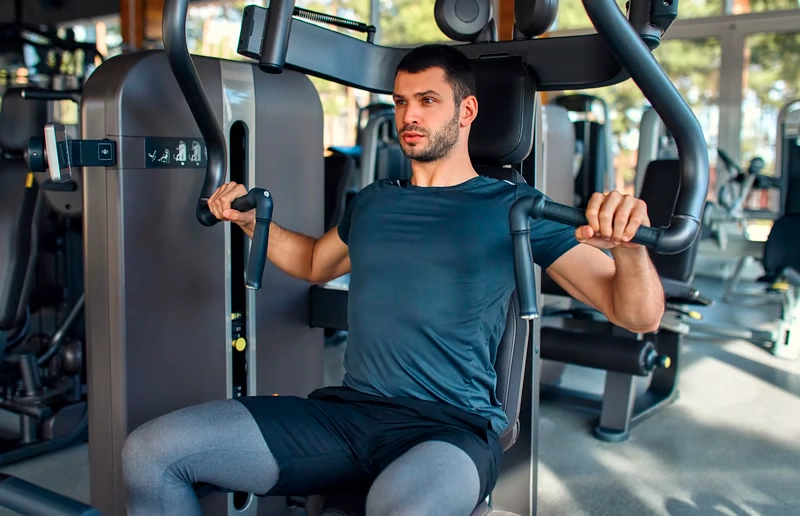
Why is 5×5 so effective? This strength training program became legendary in gyms worldwide because it delivers results you can see and feel in weeks, and science backs up every single reason why it works so well.
What Makes 5×5 Different From Other Programs?
The 5×5 program uses five sets of five repetitions for main lifts. You lift heavy weights with longer rest periods, and you train three times per week. The weight gets heavier each session, forcing your body to adapt fast.
Research shows training in the 4-8 rep range builds strength more effectively than higher rep ranges. A 2017 study confirmed that as long as you push hard, rep ranges from 5 to 30 can build muscle, but the 5 rep zone gives you the perfect balance between strength gains and muscle growth without destroying your recovery.
9 Steps To Shed 5–10kg in 6 Weeks
In only 90 minutes a week!
Includes an exercise plan, nutrition plan, and 20+ tips and tricks.
Without dead boring diets that are like watching paint dry
Without getting results at a snails pace
Why Do You Get Stronger So Fast?
Your nervous system adapts before your muscles grow. The 5×5 program trains your brain and muscles to work together better. Each heavy set teaches your body to recruit more muscle fibres at once.
Heavy lifting with adequate rest between sets forces your body to improve coordination between muscles. You learn the movement patterns deeply. The weight feels lighter after a few weeks because your nervous system got more efficient, not just because your muscles got bigger.
The longer rest periods between sets matter too. About 10 minutes of warming up and then about 50 to 60 minutes of real work gives you the sweet spot. Past 60 minutes, cortisol increases really impede recovery.
How Does 5×5 Build Muscle Mass?
You build muscle through progressive overload, and 5×5 nails this principle. When you add weight every session, you create new stress for your muscles to adapt to. Your body repairs the damage and builds the muscle fibres back bigger and stronger.
For hypertrophy, you can use repetition ranges anywhere from 5 to 30 reps, but the 5×5 program keeps you in the heavy zone where you build strength and size together. The compound movements like squats, deadlifts, and bench press hit multiple muscle groups at once, creating massive metabolic demands that trigger growth.
Training your legs first early in the week sets in motion a large number of metabolic processes that carry you through the whole week in terms of elevating metabolism and amplifying certain hormonal events in your body that are really beneficial.
What About Recovery and Adaptation?
The three-day-per-week schedule gives your muscles time to recover. You need roughly 48 to 72 hours between training the same muscle groups. The 5×5 program spaces out your training so you hit each lift multiple times per week without overtraining.
Three to five minutes of slowed breathing after training has been shown to downshift the nervous system and set you up for maximal recovery. This lets you lean into the next training session with full intensity when that training session arrives.
Sleep matters more than most people think. If you’ve slept really poorly or you’ve had a very stressful event the day before and you don’t sleep well, training the next day sets you up for getting ill. Getting ill sets you up for not being able to train for multiple days.
Why Does Progressive Overload Work So Well With 5×5?
The program follows a simple progression model. You add 2.5 kg to upper body lifts and 5 kg to lower body lifts each session. This steady increase forces your body to adapt constantly. The adaptation happens in your muscles, your nervous system, your bones, and your connective tissue all at once.
Concepts are few, methods are many. There are an infinite number of different programs and exercises and set and rep schemes that one can follow. However, there are really just a few basic concepts or principles of muscle physiology and connective tissue function that provide the basis for the adaptations that we call fitness.
The 5×5 progression is automatic. You don’t need to guess if you should add weight. The program tells you exactly what to lift every session.
Can Beginners Use 5×5?
Yes, and beginners see the fastest gains. New lifters can add weight to the bar every single week for months. The program teaches proper form on the main lifts because you repeat them multiple times per week. You get strong quickly and build a solid foundation for future training.
The exercise selection matters. For each muscle group, try and find an exercise where you get that muscle into a weighted stretch position, as well as another exercise where you’re getting contraction in the shortened position of the muscle.
How Long Should You Run 5×5?
Most people run 5×5 for 12 to 16 weeks. After that point, adding weight every session becomes difficult or impossible. Your body needs a new stimulus. You can switch to a different rep range or add more volume through additional exercises.
Periodization matters for long-term progress. For about a month, do all your resistance training in the repetition range of about four to eight repetitions with longer rest between sets, anywhere from two minutes to maybe even four minutes if it’s really heavy leg work. Then for the next month, switch to repetition range that’s closer to 8 to 12 or maybe even 15 repetitions per set, but do fewer sets overall and shorten the rest between sets.
Does 5×5 Work For Fat Loss?
The program burns calories through heavy lifting and building muscle increases your resting metabolic rate. One pound of muscle burns about six calories per day at rest while one pound of fat burns about two calories per day. If you build 30 pounds of muscle over time, you’d burn 180 extra calories per day just from having more muscle.
Exercise independent of anything that happens with your body weight will make you healthier. Exercise improves your biomarkers of health without even losing weight. It will improve your insulin sensitivity and inflammation.
The heavy squats and deadlifts in 5×5 burn significant calories during and after your workout. Your body needs energy to repair muscle tissue and adapt to the training stimulus.
How Do You Know If 5×5 Is Working?
Track your lifts in a notebook or app. If the weight on the bar goes up week after week, the program works. You should see strength gains on all five main lifts within the first month.
Your body composition changes too. Your clothes fit differently. Your shoulders and legs get bigger. Your waist might shrink even if your bodyweight stays the same because muscle takes up less space than fat.
Recovery matters as much as training. If you feel completely destroyed and can’t recover between sessions, you might need more food, more sleep, or slightly longer rest periods.
FAQ
How heavy should I start with 5×5?
Start with a weight you can lift for five reps with perfect form while leaving two reps in the tank. For most beginners, this means starting with just the empty bar for squats and bench press. The weight increases quickly so starting light lets you practice form before things get heavy.
What if I miss reps on 5×5?
If you can’t complete all five sets of five reps with good form, repeat that weight next session. If you fail three sessions in a row at the same weight, drop the weight by 10 percent and build back up.
Can women do 5×5?
Yes. Women respond to strength training the same way men do. The program works identically. Women will not get bulky from lifting heavy weights because female hormones don’t allow for the same muscle gain as men. The strength and confidence gains happen regardless of gender.
Should I do cardio with 5×5?
Walking is fine and helps with recovery. Aim for 7,000 to 12,000 steps per day. High-intensity cardio might interfere with recovery so save that for after your strength training session or on rest days.
What should I eat on 5×5?
Prioritise protein at 0.8 to 1 gram per pound of bodyweight per day. Eat enough total calories to support training and recovery. If your strength stalls and you’re not gaining weight, eat more food.