Yes, for most adults 7 hours of sleep is enough to function well. It sits at the minimum recommended by the American Academy of Sleep Medicine and the Sleep Research Society, which advise adults to get at least 7 hours a night. Whether it is enough for you depends on how you feel, how hard you train and how consistent your sleep is. This guide covers what 7 hours does for your brain, body, training and mood, and how to tell when it isn’t enough.
Large population studies keep pointing to the same range. A 2025 analysis from Oregon Health & Science University linked adequate sleep, 7 hours or more, with longer life expectancy. UK Biobank data from close to half a million adults found cognitive scores peaked around 7 hours. Seven hours is a sound target, and it is also the bottom of the healthy range, so there is little buffer if your sleep is broken or irregular.
What happens to your body with 7 hours of sleep?
Your brain does well at 7 hours. In the UK Biobank study, cognitive performance, including processing speed, memory and problem solving, was highest at about 7 hours. It declined as people slept less or more than that.
In 7 hours you typically get several rounds of deep sleep and REM sleep. Deep sleep supports physical repair and the brain’s clearing of metabolic waste. REM sleep supports memory consolidation and emotional processing. People who sleep around 7 hours generally show better working memory and impulse control than people who are short on sleep.
The physical benefits add up too. Regularly sleeping 7 hours is linked to lower rates of heart disease, type 2 diabetes, obesity and depression. Your immune system works better, pain feels less intense and you make fewer errors during the day. The 2025 Oregon research found that sleep adequacy ranked just behind smoking as a predictor of life expectancy and ahead of diet and exercise in the data examined. That is a population-level association rather than proof for any one person, but it shows how often sleep gets overlooked.
Can you build muscle on 7 hours of sleep?
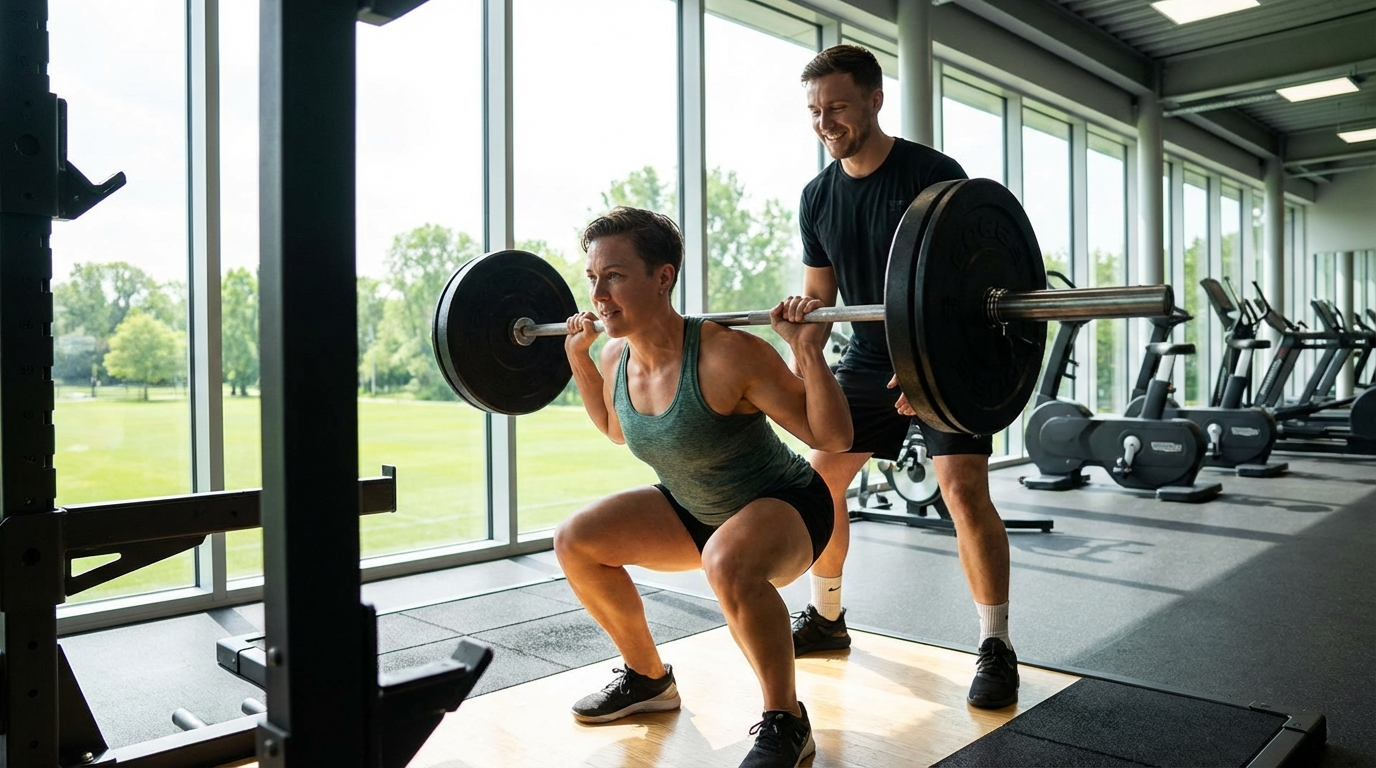
Yes. Seven hours gives you enough deep sleep for growth hormone release and for repairing muscle tissue damaged in training. More sleep may give a small edge, but it isn’t a requirement for building muscle.
Most growth hormone is released during deep sleep, and 7 hours includes several deep sleep cycles. Studies of athletes show that muscle mass and strength gains hold up at 7 hours. Extending to 8 or 9 hours tends to improve performance by small margins rather than transforming results.
Consistency matters more than chasing 9 hours. Going to bed and waking at the same time each day beats sleeping 9 hours one night and 5 the next, and your recovery is more predictable when your sleep pattern is.
Will I lose weight sleeping only 7 hours?
Yes, you can lose weight on 7 hours of sleep, and it makes dieting easier than sleeping less. Seven hours helps keep the hormones that control hunger and fullness in balance, so sticking to a calorie target takes less willpower.
Two hormones do most of the work. Ghrelin drives hunger and leptin signals fullness. After short sleep, ghrelin tends to rise and leptin tends to fall, so you feel hungrier and less satisfied after eating. Tired people also reach for more energy-dense food.
The National Sleep Foundation’s 2025 Sleep in America Poll found that around 6 in 10 adults weren’t getting enough sleep. Those who regularly slept the recommended 7 to 9 hours were more likely to report being happy, productive and on track with their goals, and people satisfied with their sleep were 45% more likely to be flourishing overall.
Trials on dieting and sleep show a similar pattern. Dieters who slept adequately lost more fat and kept more lean mass than dieters sleeping 5 to 6 hours. Cutting calories while short on sleep tends to cost you muscle rather than fat.
Is 7 hours enough for brain health?
For most adults, yes. Long-term studies tracking people over many years have found that regularly sleeping 7 hours is associated with lower dementia risk than sleeping 6 hours or less.
During sleep, the brain’s glymphatic system clears proteins and metabolic waste that build up while you are awake, including beta-amyloid, which is linked to Alzheimer’s disease. Seven hours gives this process enough time to run. Short, broken sleep cuts into it.
Controlled studies show the short-term effects too. When people hold to 7 hours over several weeks, working memory and cognitive flexibility hold up. People sleeping less than 7 hours show slower reaction times, shorter attention spans and more difficulty adapting when circumstances change.
Brain imaging from the UK Biobank also found that people sleeping about 6 to 8 hours had larger grey matter volume in regions tied to memory, decision making and emotional processing. Sleeping well below 6 hours or well above 9 was linked to smaller volumes in several of these regions.
Does 7 hours affect your mood and mental health?
Yes. Sleep is one of the strongest levers on emotional stability, and 7 hours is enough for most people to handle stress without feeling fragile.
Sleep governs how well the amygdala, which processes emotion, works with the prefrontal cortex, which regulates it. With adequate sleep the two communicate well and you make level-headed decisions under pressure. Below 7 hours that link weakens, and you become more reactive.
People who regularly sleep less than 7 hours have higher rates of depression and anxiety. Sleep loss also raises cortisol, which keeps stress elevated through the day. Research from Oregon Health & Science University ranked inadequate sleep just below smoking as a predictor of poor health outcomes.
Younger people show the same pattern. Students who meet sleep recommendations report better social functioning and fewer emotional and behavioural difficulties than those who fall short.
Can athletes perform well on 7 hours?
They can, though many athletes do better with 8 or 9 hours when training load is high. Seven hours meets the baseline for muscle recovery and coordination.
In research on physically active university students, extending sleep from about 7.9 hours to about 8.8 hours improved performance, particularly in morning sessions. The gains were modest, around 10% in some tests, and the students on less sleep still performed well.
Training load decides how much extra sleep you need. Daily intense strength or endurance work calls for closer to 8 or 9 hours. For moderate training, 7 hours handles recovery well. Professional athletes often sleep 9 hours or more, but they are pushing their bodies much further than most people ever will.
Seven hours also holds up during a diet. When athletes cut training volume in a fat-loss phase but kept intensity high, 7 hours of sleep was enough to hold onto muscle.
What happens if I only get 6 hours instead of 7?
Dropping from 7 to 6 hours causes measurable declines in performance and health, and you often don’t notice them. In classic sleep restriction experiments, two weeks of 6 hours a night produced cognitive impairment comparable to going one to two nights without sleep. Participants rated themselves as only slightly sleepy while their test scores kept falling.
Attention and reaction time suffer first. Tests of sustained attention show progressive decline when people sleep 6 hours for several nights in a row, and the decline compounds the longer it goes on.
Longer-term studies point the same way. Research following adults over about 8.5 years linked sleeping 6 hours or less in midlife with a higher risk of later cognitive impairment than sleeping 7 to 8 hours, and the Whitehall cohort found a similar link with dementia.
The body pays too. Chronic short sleep raises the risk of weight gain, type 2 diabetes, high blood pressure and heart disease, and the 2025 Oregon analysis tied insufficient sleep more strongly to shorter life expectancy than diet or exercise habits.
How do I know if 7 hours is right for me?
Most adults need 7 to 9 hours, and where you land depends on genetics, age and lifestyle. Seven hours works if you wake up reasonably refreshed, hold steady energy through the day and perform well mentally and physically.
Test it. Spend two to three weeks on a consistent schedule and note how you feel. If you wake before your alarm after about 7 hours and feel good all day, that is likely your number. If you rely on an alarm and feel groggy until mid-morning, you may need closer to 8.
Your day-to-day performance is the best feedback. Watch your reaction time, the quality of your decisions and your mood. If you are struggling in those areas, add 30 minutes to your sleep time and reassess after two weeks.
Age matters as well. Younger adults recovering from hard training may need 8 or 9 hours, while older adults often do well on 7 to 8. The UK Biobank data found that 7 hours stayed the best-performing duration even for people over 60.
Signs 7 hours isn’t working for you
Some people sleep 7 hours on paper and still run on empty. We see this regularly in client check-ins, and the clearest early warning is a sleep score that sits stuck at 3 out of 5 week after week. When we see that, we treat it as a flag worth acting on rather than a bad patch that will pass.
Other signs usually travel with it:
- Workouts that keep getting skipped, shortened or dragged through.
- Nutrition tracking that falls apart, especially in the afternoon and evening.
- Needing an alarm and a coffee just to feel functional.
- Energy that stays low even when training and food are otherwise on point.
One travelling client logged a 3 out of 5 sleep score nearly every week, and their workouts and food tracking were disrupted at the same time. The useful move was to work out exactly what was causing it, whether that was time zones, hotel rooms, late meals or an irregular bedtime, and then plan the next trip around it instead of hoping for the best. Another client’s energy was being held back by the same 3 out of 5 score, so we worked on sleep and training consistency together, since each one feeds the other.
The fix is rarely one big change. We point clients to our sleep guide and ask them to work on just one or two things at a time, ticking each off before adding another. Sleep usually improves after a few weeks or months of that steady approach, not overnight, so judge progress over a month rather than a night.
Can I train hard and still sleep only 7 hours?
Yes, provided your nutrition and recovery are solid. When sleep is adequate but not abundant, how hard you train matters more than how much volume you pile on.
People cutting weight while training hard often reduce volume but keep intensity high, and this works well on 7 hours of sleep. You keep muscle and strength as long as you push hard in the gym, even if you do fewer sets. That makes it a sensible approach when recovery capacity is limited.
The exception is very high volume or multiple sessions a day. Competitive athletes training twice daily often need 9 hours or more. For someone training four to six times a week at normal intensity, 7 hours handles recovery fine.
Frequently Asked Questions
Is 7 hours of sleep better than 8?
Both fall in the healthy range for adults. Cognitive performance peaks around 7 hours in large studies, with little difference between 7 and 8. Choose based on how you feel, your training demands and your schedule.
Can I function on 7 hours if I’m used to 8?
Yes, most people adapt within a few weeks. Holding any consistent duration between 7 and 9 hours beats swinging between 5 and 10. If you are dropping from 8 to 7, do it gradually over a week or two.
Does 7 hours count if I wake up during the night?
Quality matters as much as quantity. Broken sleep means fewer complete cycles. Brief awakenings of a few minutes do little harm, but lying awake for 30 minutes or more cuts the benefit, so count time actually asleep rather than time in bed.
Will 7 hours make me gain weight?
No. People sleeping 7 hours generally have better appetite regulation and make healthier food choices than those sleeping less. Weight gain is more closely linked to sleeping under 6 hours or to very irregular sleep.
Is 7 hours enough during stressful periods?
It gives baseline protection, but you may benefit from 8 hours during major life changes. Stress raises cortisol, which can interfere with sleep quality, so protect your wind-down routine as well as your total hours.
Can teenagers function on 7 hours?
No. Teenagers need 8 to 10 hours a night because their brains are still developing. Regularly falling short is linked to poorer school performance and more emotional difficulties.
Does coffee help if I only get 7 hours?
Coffee masks tiredness but doesn’t replace sleep. If 7 hours is your consistent amount and you feel good, you don’t need it to function. If you are tired on 7 hours, caffeine won’t fix the underlying shortfall, and a late cup can make the next night’s sleep worse.
Should I nap if I only sleep 7 hours at night?
Not necessarily. Some people like a 20 minute nap in the early afternoon, and that is fine. But if you need a daily nap to function, you probably need more sleep at night.
Can I catch up on sleep on weekends?
Only partly. Sleeping in doesn’t fully undo weekday restriction, and a steady 7 hours every night produces better outcomes than 6 hours during the week and 9 on weekends.
Will my workout performance suffer on 7 hours?
For most people, no. Consistent 7 hours supports strength gains and endurance. Elite athletes often need 8 to 9 hours, but recreational exercisers usually do fine on 7 with good nutrition and rest days.
Sleep drives recovery, performance and overall health, so it pays to work out what you personally need. If you are curious about the fitness profession itself, see where personal trainers earn the highest salaries. For recovery options beyond sleep, there is also a guide to vibration plates for lymphatic drainage. And if you are struggling to balance sleep, training and recovery, a personal trainer in Rosebud can help you get all three working together.