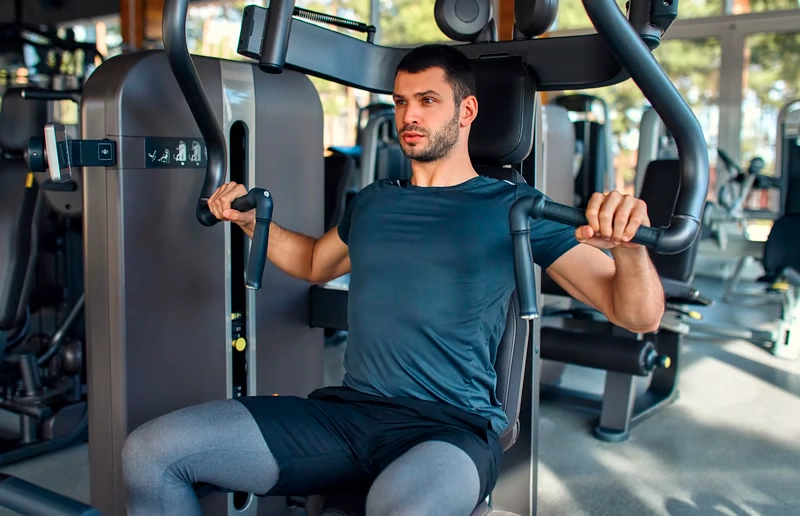
Yes, 3 sets of 10 can be enough for beginners to build skeletal muscle through resistance training. Completing 10 reps and training each muscle group 2-3 times per week, while eating enough protein to support protein biosynthesis, provides an effective starting workout. Research indicates this approach can deliver 9 sets per muscle weekly. As your strength improves, gradually increasing the load and total weekly volume can help sustain muscle hypertrophy.
What happens when you only do 3 sets of 10 reps?
Those 3 sets of 10 provide 30 total reps for each exercise. Performing this for each muscle group twice weekly produces 6 sets, or 60 reps per muscle per week, across your sessions. Research suggests beginners can build muscle with as few as 1-5 weekly sets per muscle, while 9 sets per week can produce dramatic gains during the first year of training. This recommendation can apply to both upper-body and leg exercises.
A 2017 study by Brad Schoenfeld found that 3 sets of 10 repetitions produced the same muscle growth as 7 sets of 3 repetitions. The group doing 3 sets of 10 finished their workouts in 17 minutes and felt fresh, while the heavy-set group took 70 minutes, complained of sore joints, and had two people drop out from injuries.
The bodybuilding approach of 3 sets with moderate reps wins on efficiency and sustainability. You get equal muscle growth in less time with less joint wear and tear.
9 Steps To Shed 5–10kg in 6 Weeks
In only 90 minutes a week!
Includes an exercise plan, nutrition plan, and 20+ tips and tricks.
Without dead boring diets that are like watching paint dry
Without getting results at a snails pace
How many sets do you actually need per week?
Your training experience determines how many sets build muscle. Research shows a clear progression as you advance.
Beginners need 1-9 sets per muscle per week. Studies demonstrate that complete beginners build muscle with just 1 set per exercise when training properly. Push this to 4-8 sets weekly if you want faster results, but you don’t need more in your first year.
Intermediate lifters require 10-20 sets per muscle per week. After 1-4 years of consistent training, your muscles adapt and need more work to keep growing. A 2017 review found at least 10 weekly sets per muscle group maximizes muscle mass increases, with benefits continuing up to around 20 sets.
Advanced lifters respond best to 12-28 sets per muscle per week. Research on experienced bodybuilders shows this range produces the largest hypertrophy gains. Some competitive athletes push to 30 sets weekly, but recovery becomes harder and injury risk increases.
Does 3 sets of 10 work for building strength?
No, this rep scheme doesn’t optimize strength gains. Strength training requires heavier weights with 1-5 reps per set and 3-5 minutes rest between sets. The lighter loads used for 10 reps don’t recruit your nervous system effectively for maximum force production.
A 2013 study compared 1 set versus 3 sets of 6 reps at 85% of one-rep max. Both groups increased strength similarly, showing that with heavy loads, even single sets work when you train hard enough. For pure strength, total sets matter less than lifting heavy weights with full recovery between efforts.
But strength training takes more time than hypertrophy work. Doing 24 sets of 3 reps with heavy weight and long rest periods takes 2-3 hours. The same muscle stimulus from 13 sets of 10 reps takes about an hour with shorter rest.
What changes when you train each muscle more than once per week?
Training frequency multiplies your results from 3 sets of 10. When you hit each muscle 2-3 times weekly instead of once, you spend more time growing and less time waiting to recover.
One workout of 12 sets per muscle creates excessive damage. Research shows that by sets 6-8 per session, you get diminishing returns and just pile on fatigue. Your muscles need 2-5 days to fully recover, leaving you in maintenance mode for part of each week.
Split those 12 sets across two workouts of 6 sets each. You train every 3-4 days, your muscles recover faster from the lighter damage, and you stimulate growth continuously throughout the week. Studies comparing once-weekly versus twice-weekly training show significantly better muscle growth with the higher frequency approach when total weekly sets are equal.
Three sessions weekly works even better for most people. Doing 3 sets of 10 for each muscle three times per week gives you 9 weekly sets, which lands perfectly in the beginner-to-intermediate sweet spot. You also practice each movement pattern more frequently, improving your technique faster.
Do you need to lift heavy weights or can lighter weights build muscle?
Lighter weights build just as much muscle as heavy weights when you take sets close to failure. A 2016 study compared training at 30% versus 80% of one-rep max and found identical muscle growth in both groups after 12 weeks.
The key is training near failure. Whether you lift 30% of your max for 30 reps or 80% for 8 reps, your muscles grow the same amount if you push those final reps hard. Research shows this holds true across the full range from 5 to 40 reps per set.
Sets of 10 reps hit a practical sweet spot. You can use challenging weights without crushing your joints, you don’t spend 5 minutes resting between sets, and you avoid the burning pain of 30-rep sets. Most people find 6-12 reps per set easiest to push hard consistently.
Your body recruits muscle fibers based on force needs. Light weights recruit small muscle fibers first, then activate larger ones only after smaller fibers fatigue. Heavy weights immediately recruit large muscle fibers. Both paths lead to growth when you train close to failure.
How close to failure should you train with 3 sets of 10?
Take your sets within 0-2 reps of failure for maximum muscle growth. Research shows that stopping 3-4 reps short of failure significantly reduces the growth stimulus, especially with lighter weights and higher reps.
A 2021 study found that training to failure versus stopping 4 reps short produced the same strength gains but more muscle growth in the failure group. The closer you push to your limit, the more muscle fibers you recruit and fatigue.
With sets of 10, aim to finish feeling like you could do 1-2 more reps maximum. If you stop at rep 10 but could easily bang out 5 more, you wasted that set. The last 2-3 reps of each set trigger most of the growth stimulus.
Beginners should leave 2-3 reps in reserve while learning proper form. Intermediate lifters can safely push to 1 rep from failure. Advanced lifters sometimes take sets to complete failure, but this isn’t necessary and creates more fatigue without much extra benefit.
What rest period works best between sets of 10 reps?
Rest 60-90 seconds between sets when training for muscle growth with 10 reps. This short recovery keeps workout time reasonable while allowing enough strength recovery to maintain good reps on subsequent sets.
Research comparing 1-minute versus 3-minute rest periods shows similar hypertrophy results. The key factor is completing your target reps with good form, not the exact rest duration. If 60 seconds leaves you too gassed to hit 10 quality reps, extend to 90-120 seconds.
Shorter rest creates more metabolic stress, which contributes to muscle growth. When you start your next set while breathing hard and with some muscle burn, you accumulate metabolic byproducts that signal growth. Studies show this metabolic stress pathway complements the mechanical tension from lifting weights.
Longer rest works better for compound movements. Squats and deadlifts tax your whole body more than bicep curls. Rest 2-3 minutes between sets of heavy squats but only 60 seconds between sets of lateral raises.
Can you build muscle doing 3 sets of 10 with bodyweight only?
Yes, bodyweight training builds muscle when you choose exercises that challenge you within the 10-rep range. Push-ups, pull-ups, squats, and lunges all work, but you need to adjust difficulty so rep 10 feels hard.
A 2015 study had participants train with no external load, just maximum voluntary contractions throughout the full range of motion. After 6 weeks, muscle thickness increased similarly to groups using weights. The key was contracting muscles as hard as possible through every rep.
Progress bodyweight exercises by changing leverage or adding pauses. Can’t do 10 regular push-ups? Start with incline push-ups on a bench. Can 10 push-ups feel too easy? Try decline push-ups with feet elevated or add a 2-second pause at the bottom. You can also slow down each rep to increase time under tension.
True beginners often can’t complete 10 bodyweight reps of basic movements. That’s fine, do as many as possible with good form, rest, and try again. You’ll build strength quickly and reach 10 reps within a few weeks. Then make the exercise harder to stay in the challenging range.
How long until you see results from 3 sets of 10?
You’ll notice strength gains within 2-3 weeks from 3 sets of 10 repeated 2-3 times per week. Visible muscle growth appears around 6-8 weeks for most beginners. Research shows the first 4-8 training sessions produce strength improvements mainly from neural adaptations, not actual muscle growth.
Your nervous system learns to recruit muscle fibers more efficiently before your muscles physically enlarge. This explains why you get stronger fast but don’t see size changes immediately. After 6-10 weeks of consistent training, muscle protein synthesis accumulates enough to create visible growth.
A 2016 study tracked untrained men doing 3 sets per exercise, 3 times weekly for 8 weeks. Muscle thickness of the biceps, triceps, and quadriceps increased significantly in all participants. The moderate load group doing 10 reps showed equal growth to the heavy load group doing 3 reps.
Measure progress through performance, not just appearance. Track the weight you use for your sets of 10 each week. If you started squatting 50 pounds for 3 sets of 10 and now squat 70 pounds for the same sets, your muscles are growing even if the mirror hasn’t caught up yet.
Should you do 3 sets of 10 for every exercise?
No, adjust your sets and reps based on the exercise type and your goals for each muscle. Research shows total weekly sets per muscle matter more than sets per individual exercise.
Compound movements benefit from multiple sets. Squats, deadlifts, bench press, and rows involve many muscles and allow progressive overload across years of training. Do 3-5 sets of these exercises to accumulate enough volume.
Isolation exercises work well with fewer sets. Bicep curls, lateral raises, and leg extensions target single muscles. One or two hard sets often provides enough stimulus without creating excessive fatigue. You can spread your weekly volume across different isolation exercises rather than piling many sets into one movement.
A 2013 study found that experienced lifters doing 1 set versus 3 sets per exercise showed similar strength increases when intensity remained high. The key distinction is 1 set per exercise doesn’t equal 1 set per muscle group. Train each muscle with multiple exercises or multiple sessions to reach adequate weekly volume.
Vary rep ranges for complete development. Do some exercises with 6-8 reps using heavier weight, others with 10-12 reps at moderate weight, and occasional sets of 15-20 reps with lighter loads. This variety challenges muscles through different mechanisms and prevents boredom.
How much protein do you need when doing 3 sets of 10?
Consume 1.6-2.2 grams of protein per kilogram of bodyweight daily to support muscle growth from your training. For a 75-kilogram person, that’s 120-165 grams of protein spread throughout the day.
Research shows protein intake below 1.6 grams per kilogram limits muscle growth even when training hard. A 2018 meta-analysis of 49 studies found that protein supplementation increased muscle mass and strength gains during resistance training, with benefits plateauing around 2.2 grams per kilogram.
Distribute protein across 3-5 meals daily rather than loading it all at once. Studies show that eating 20-40 grams of protein every 3-4 hours maximizes muscle protein synthesis throughout the day. Your body can only use so much protein at once for muscle building.
Time protein around workouts for optimal results. Consuming 20-40 grams of protein within 2 hours after training enhances recovery and muscle growth. But total daily protein intake matters more than precise timing. If you eat enough protein throughout the day, workout timing becomes less critical.
What happens when you eat too few calories while doing 3 sets of 10?
You won’t build significant muscle in a calorie deficit no matter how well you train. Muscle growth requires energy beyond what your body burns daily. Research shows you need a surplus of 250-500 calories daily to optimize muscle building.
Studies on calorie-restricted lifters show they maintain existing muscle mass and gain strength from neural improvements, but rarely add new muscle tissue. Your body prioritizes survival over building new tissue when energy is scarce.
A small surplus works better than a large one. Eating 500 extra calories daily supports muscle growth without excess fat gain. Research shows untrained individuals can gain 0.5-1 pound of lean muscle monthly in a modest surplus. Eating 1000+ extra calories just adds more fat.
Advanced lifters need even smaller surpluses. After years of training, muscle growth slows dramatically. Competitive natural bodybuilders in growth phases might gain only 0.25 pounds of muscle monthly, requiring a tiny 100-200 calorie daily surplus to avoid unnecessary fat accumulation.
Do you need supplements to grow muscle from 3 sets of 10?
No, supplements aren’t required for muscle growth from resistance training. Studies consistently show that total protein intake, adequate calories, and proper training drive results. Supplements might add a small edge but won’t compensate for poor training or nutrition.
Creatine monohydrate is the most effective supplement for muscle growth. Research shows 3-5 grams daily increases muscle mass and strength gains from resistance training. A 2003 meta-analysis found creatine supplementation combined with training produced 8% greater strength gains than training alone.
Protein powder offers convenience, not magic. Whey protein helps you reach your daily protein target more easily, especially post-workout when you might not feel like eating solid food. But chicken, eggs, and Greek yogurt build muscle just as effectively if you can eat enough whole food protein.
Pre-workout supplements can improve performance through caffeine and other stimulants. Studies show caffeine intake 30-60 minutes before training increases reps completed and total training volume. But a cup of coffee delivers the same effect as expensive pre-workout formulas.
How do you know when to increase volume beyond 3 sets of 10?
Progress stalls when your current volume no longer challenges your muscles enough. If you complete the same weight for 3 sets of 10 for three consecutive weeks without increasing load, add volume.
Your strength should improve week to week. Research shows that progressive overload, gradually increasing weight or volume, drives continued muscle growth. When you can’t add weight while maintaining 10 good reps, add a fourth set or a second weekly session for that muscle.
Body measurements provide objective feedback. Track arm, chest, and thigh circumference monthly. If measurements don’t increase over 2-3 months despite consistent training and adequate nutrition, your volume is probably too low for your current adaptation level.
Listen to recovery signals. If you finish workouts feeling fresh with minimal muscle soreness, you can handle more volume. If you drag through workouts, can’t sleep well, or notice decreased performance, you’ve probably added too much volume too fast. Studies show that excessive volume actually decreases muscle growth and can shrink muscle size.
What training split works best with 3 sets of 10?
Full-body workouts 2-3 times weekly optimize results for beginners using 3 sets of 10. This frequency allows you to train each muscle 2-3 times per week, hitting the sweet spot research identifies for muscle growth.
A 2016 study compared training each muscle once weekly versus three times weekly with equal total weekly volume. The three-times-weekly group gained significantly more muscle and strength. Training frequency matters because it keeps protein synthesis elevated throughout the week rather than just for 24-48 hours after one workout.
Upper-lower splits work well for intermediate lifters. Train upper body Monday and Thursday, lower body Tuesday and Friday. This four-day split gives each muscle group two weekly sessions with a day of recovery between same-muscle workouts. You can do 6 sets per muscle per workout, totaling 12 weekly sets.
Body part splits require higher volume per session. If you train chest only on Monday, you need 10-15 sets that day to reach adequate weekly volume. Research shows this approach works for advanced lifters but isn’t optimal for beginners who recover and grow better from higher frequency training.
How important is exercise selection when doing 3 sets of 10?
Exercise selection determines whether your 3 sets of 10 actually build the muscles you’re targeting. Research shows exercises that place muscles under stretch and provide a full range of motion produce superior growth.
Choose compound movements as your foundation. Squats, deadlifts, bench press, rows, and overhead press train multiple muscles simultaneously and allow heavy loading. Studies show these exercises produce greater testosterone and growth hormone responses than isolation movements.
Add isolation work for specific muscles lagging behind. After your main lifts, use 1-2 isolation exercises per muscle group to accumulate more volume. Bicep curls, lateral raises, and leg curls let you target individual muscles when they’re already fatigued from compounds.
Prioritize exercises that challenge muscles under load in a stretched position. A 2023 study comparing full range versus partial range of motion found significantly greater muscle growth from full-range training. Exercises like Romanian deadlifts, dumbbell flies, and overhead tricep extensions place muscles under tension while lengthened.
Vary exercises every 4-8 weeks to prevent accommodation. Your nervous system adapts to specific movement patterns, making exercises feel easier even when muscles aren’t growing. Research shows that changing exercises periodically maintains progress by challenging muscles through different angles and movement patterns.
Can you lose fat while doing 3 sets of 10?
Yes, resistance training with 3 sets of 10 helps preserve muscle mass during fat loss, but you need a calorie deficit to actually lose fat. Studies show that combining resistance training with a calorie deficit produces better body composition changes than diet alone.
A 2018 study compared diet only versus diet plus resistance training in overweight adults. Both groups lost similar amounts of total weight, but the resistance training group lost 95% fat and kept their muscle mass. The diet-only group lost muscle along with fat, ending up with a higher body fat percentage despite weighing less.
Keep training intensity high during fat loss. Research shows that maintaining the same weights and rep ranges during a calorie deficit signals your body to preserve muscle. If you dramatically reduce training load just because you’re dieting, your body has no reason to keep that muscle.
Protein becomes even more important when losing fat. Studies recommend 2.2-2.4 grams per kilogram during fat loss to maximize muscle retention. This higher intake partially offsets the muscle-sparing effects normally provided by a calorie surplus.
How many exercises should you do 3 sets of 10 for in one workout?
Perform 5-7 exercises per workout when doing 3 sets of 10 reps each. This provides 15-21 total sets, which research shows effectively stimulates muscle growth without creating excessive fatigue.
A full-body workout might include squat, bench press, row, overhead press, leg curl, bicep curl, and tricep extension. That’s seven exercises covering all major muscle groups with 21 total sets completed in 60-75 minutes including warm-ups and rest periods.
An upper-body workout could use bench press, row, overhead press, lat pulldown, lateral raise, and bicep curl. Six exercises, 18 sets, targeting chest, back, shoulders, and arms in about an hour.
More isn’t always better. A 2010 study compared 3, 6, and 12 sets per muscle group per session in experienced lifters. The 3-set and 6-set groups showed similar muscle growth. The 12-set group didn’t grow any more and some participants actually lost muscle, likely from inadequate recovery.
Beginners should start with 3-4 exercises per workout and add exercises as work capacity improves. Your first month might be just squats, bench press, and rows. Month two adds overhead press. Month three includes isolation work. This gradual approach prevents overwhelming your recovery capacity.
FAQ
Will 3 sets of 10 make me bulky?
No, 3 sets of 10 reps won’t make you bulky unless you eat a significant calorie surplus for months. Building substantial muscle mass takes years of consistent training and deliberate overfeeding. Most people doing 3 sets of 10 a few times weekly will develop a toned, athletic appearance rather than bodybuilder size.
Can I do 3 sets of 10 every day?
No, don’t train the same muscles with 3 sets of 10 every day. Research shows muscles need 48-72 hours to recover and grow after a training session. Daily training of the same muscle groups leads to overtraining, decreased performance, and potential injury. Alternate muscle groups or take rest days between sessions.
Is 3 sets of 10 good for seniors?
Yes, 3 sets of 10 reps works excellently for seniors when using appropriate weights. Studies show resistance training in older adults increases bone density, prevents muscle loss, reduces fall risk, and improves functional capacity. Start with lighter weights and focus on perfect form. Many seniors benefit from 12-15 reps per set instead of 10 to use even lighter loads while still reaching fatigue.
Should I increase weight or reps first?
Increase reps first until you can complete 12 reps per set, then increase weight and drop back to 10 reps. This progressive overload strategy, called double progression, works better than random weight jumps. Research shows gradual progression prevents injury and maintains consistent muscle growth over time.
How long should a workout take doing 3 sets of 10?
Plan 45-60 minutes for a complete workout doing 3 sets of 10 across 5-7 exercises. This includes 5-10 minutes of warm-up, 30-40 minutes of working sets with 60-90 seconds rest between sets, and 5 minutes of cool-down. Workouts taking longer than 90 minutes might indicate too much volume or excessive rest periods.
Can I build muscle doing 3 sets of 10 twice a week?
Yes, training each muscle twice weekly with 3 sets of 10 builds muscle effectively. This gives you 6 total sets per muscle per week, which research shows produces muscle growth in beginners and intermediate lifters. Advanced lifters might need to increase to 3 sessions weekly or add more sets per session.
What if I can’t complete 10 reps on my last set?
If you complete fewer than 8 reps on your final set, reduce the weight by 5-10% for your next workout. The goal is to complete all reps with good form while feeling challenged. Research shows that failing to complete sets due to excessive weight provides less growth stimulus than completing all prescribed reps at a slightly lighter load.
Do I need to warm up before 3 sets of 10?
Yes, always warm up before working sets. Start with 5 minutes of light cardio to raise body temperature, then do 1-2 warm-up sets with lighter weight before your working sets. Studies show proper warm-ups reduce injury risk and improve performance by preparing muscles and joints for heavier loads.
Can women build muscle doing 3 sets of 10?
Yes, women build muscle from 3 sets of 10 using the same principles as men. Research shows women respond similarly to resistance training as men in terms of relative strength and muscle gains. Women produce less testosterone, so absolute muscle mass remains lower, but the training stimulus works identically.
How much weight should I use for 3 sets of 10?
Choose a weight that makes reps 8-10 feel challenging but achievable with good form. If you can easily do 15 reps, increase weight by 5-10%. If you can’t complete 8 reps, reduce weight. Research shows that loads of 60-80% of your one-rep max work best for sets of 10 reps, but focusing on the effort level matters more than calculating exact percentages.