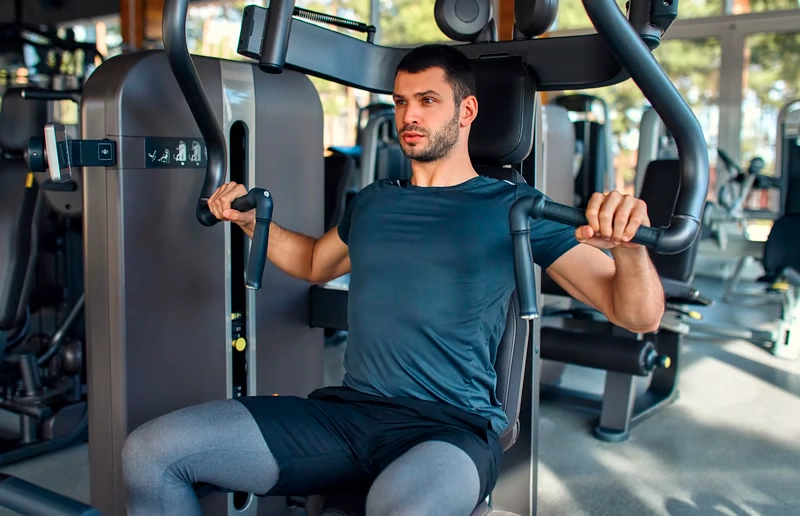
The answer is not what most people expect. Younger does not automatically mean more active. The data tells a more complicated story, and once you see it, it changes how you think about fitness across your lifetime.
Which Generation Exercises the Most?
Baby Boomers, people born between 1946 and 1964, consistently rank as the most likely to meet structured exercise guidelines compared to Millennials and Gen Z. A 2023 report from the Physical Activity Council found that adults aged 55 to 64 had higher rates of regular exercise participation than adults aged 18 to 34.
That sounds backwards. But it makes sense when you look at the reasons. Older adults often have more time, more financial stability to access gyms, and stronger motivation tied to health outcomes. They feel the consequences of not moving. That feedback loop is powerful.
Gen X, born between 1965 and 1980, sits in the middle. They exercise regularly but carry the highest rates of stress-related sedentary behavior, largely from career and family demands peaking at the same time.
Are Gen Z More Physically Active Than Millennials?
On paper, Gen Z looks more active. They talk about fitness more, post about it more, and gym membership among 18 to 24 year olds has grown steadily since 2020. But talking about fitness and doing fitness are different things.
The World Health Organization found that over 80 percent of adolescents globally do not meet the recommended 60 minutes of moderate to vigorous physical activity per day. Gen Z sits right in that window. screen time is the main driver. The average Gen Z person spends over 9 hours a day on screens, and that time has to come from somewhere.
Millennials, born between 1981 and 1996, are the most likely generation to pay for fitness apps, gym memberships, and wellness products. But paying for access is not the same as using it. Research from Mintel shows Millennials have the highest gym membership dropout rates of any generation.
So Gen Z talks about it more. Millennials spend more on it. Neither group is actually doing it at the rates they claim.
9 Steps To Shed 5–10kg in 6 Weeks
In only 90 minutes a week!
- Includes an exercise plan, nutrition plan, and 20+ tips and tricks.
- Without dead boring diets that are like watching paint dry
- Without getting results at a snails pace
Which Age Group Is the Least Physically Active?
Adults aged 18 to 24 are consistently the least physically active age group when you measure actual movement, not just gym visits. This is the period when structured sport and physical education disappear from daily life, and nothing replaces them.
The Australian Institute of Health and Welfare reports that only 15 percent of Australians aged 18 to 24 meet both the aerobic and muscle-strengthening guidelines. That number is lower than every older age group except adults over 75.
The transition out of school removes the built-in movement that most young people never noticed they were getting. No more PE class, no more team sport three times a week, no more walking between buildings on a campus. Sedentary work and study habits fill that gap fast.
This is the age group that needs the most intervention, and it gets the least attention because young people are assumed to be naturally active. They are not.
How Does Physical Activity Change Across Generations?
Physical activity follows a U-shaped curve across a lifetime, but the curve has shifted over the past 30 years.
Children are active. Teenagers drop off sharply. Young adults hit a low point. Adults in their 30s and 40s often pick activity back up, especially around health scares or life events. Adults in their 50s and 60s who stay active tend to be very consistent. Then activity drops again in the 70s and beyond due to mobility and health limitations.
What has changed is the baseline. Each successive generation starts with lower activity levels than the one before it. A 2019 study published in the Journal of Sport and Health Science tracked activity levels across generations and found that Millennials were less active at age 25 than Gen X was at the same age, and Gen X was less active at 25 than Boomers were.
The trend is moving in the wrong direction with each generation. Technology, urban design, and work culture all push toward sitting. The body adapts to whatever environment it lives in, and modern environments are built for stillness.
Are Older Generations More Active Than Younger Ones in Daily Movement?
Yes, and this is the part that surprises most people. When researchers measure total daily movement, not just formal exercise, older adults often outperform younger ones.
Step count data from wearable devices shows adults over 50 average more daily steps than adults aged 18 to 34. A large-scale analysis using data from over 700,000 people across 111 countries, published in Nature in 2017, found that activity levels peak in the mid-30s and decline from there, but the decline in younger cohorts has accelerated in recent decades.
Older adults who grew up before smartphones and desk jobs built movement into their daily lives as a default. Walking to the shops, doing yard work, physical labor, these were normal parts of life. That habit carries forward.
Younger generations have to consciously schedule movement because their default environment removes it. That is a fundamentally different relationship with physical activity, and it requires more deliberate effort to overcome.
What Percentage of Each Generation Meets Physical Activity Guidelines?
The guidelines from the WHO recommend 150 to 300 minutes of moderate aerobic activity per week, plus muscle-strengthening activities on two or more days. Here is how each generation actually performs against that standard.
- Gen Z (born 1997 to 2012): Approximately 20 percent of adults in this cohort meet full guidelines. Adolescents in this group perform even worse, with under 20 percent meeting youth-specific recommendations.
- Millennials (born 1981 to 1996): Around 25 to 30 percent meet full guidelines. They are the most likely to meet aerobic guidelines but least likely to include strength training.
- Gen X (born 1965 to 1980): Approximately 30 percent meet full guidelines. This group shows the widest split between highly active individuals and completely sedentary ones.
- Baby Boomers (born 1946 to 1964): Around 35 percent meet full guidelines, the highest of any generation. Walking is the dominant activity in this group.
- Silent Generation (born 1928 to 1945): Compliance drops back down due to physical limitations, but daily movement through light activity remains high.
These numbers come from the CDC’s National Health Interview Survey and the Australian Bureau of Statistics National Health Survey, both of which use self-reported data. Actual compliance is likely lower across all groups because people overestimate their activity levels when asked to recall them.
Why Do Boomers Exercise More Consistently Than Younger Generations?
Three things drive this. Motivation, time, and habit formation.
Baby Boomers exercise because they feel the direct health consequences of not doing so. Joint pain, cardiovascular risk, energy levels, these are immediate and personal. The motivation is visceral, not abstract. When a 60-year-old skips the gym for two weeks, they feel it. When a 22-year-old skips the gym for two weeks, they often do not.
Time is the second factor. Retirement or reduced work hours free up the schedule. Exercise stops competing with everything else and becomes a daily anchor instead.
Habit formation is the third. Research on habit formation shows that behaviors practiced consistently over decades become automatic. Boomers who have exercised since their 40s are not making a decision to exercise each morning. They are following a groove worn deep by repetition.
This is actually good news for younger generations. The habits you build now compound. Starting at 25 is better than starting at 45. The data on which generation is the most physically active shows that consistency over time beats intensity in short bursts.
What Does This Mean for How You Should Train?
The generational data points to one clear conclusion. Structured, consistent movement needs to be built into your life deliberately, because your environment will not do it for you.
For Gen Z and Millennials, the priority is replacing lost incidental movement. Walk more. Take stairs. Build non-exercise activity into your day before worrying about optimizing your gym program. The research on NEAT, non-exercise activity thermogenesis, shows that daily movement outside of formal exercise accounts for more total caloric expenditure and health benefit than most people realize.
For Gen X, the challenge is protecting exercise time from being consumed by other demands. Scheduling workouts like appointments, not intentions, is the behavioral strategy with the strongest evidence behind it. Working with a personal trainer can help enforce this commitment.
For Boomers, the data says keep going. Consistency is your advantage. The research on aging and exercise shows that adults who maintain regular activity into their 60s and 70s retain significantly more muscle mass, bone density, and cognitive function than those who stop.
FAQ
Which generation is the most physically active overall?
Baby Boomers meet formal exercise guidelines at higher rates than any other living generation. Around 35 percent of Boomers meet WHO physical activity recommendations compared to 20 to 30 percent of younger generations.
Why are younger people less active than older generations?
Screen time, sedentary work and study environments, and the removal of structured physical education from daily life all reduce movement in younger cohorts. Older generations built movement into daily life as a default before technology made stillness the path of least resistance.
Does Gen Z exercise more than Millennials?
Gen Z shows higher gym interest and fitness awareness, but actual activity rates are similar or lower than Millennials. Both groups fall well below Baby Boomers in meeting physical activity guidelines.
What age group is the least active?
Adults aged 18 to 24 are consistently the least active age group in population-level data, despite being the youngest. The transition out of school removes built-in physical activity with nothing to replace it.
How much exercise does each generation actually do?
Self-reported data suggests Boomers lead at around 35 percent meeting full guidelines, followed by Gen X at 30 percent, Millennials at 25 to 30 percent, and Gen Z at around 20 percent. Actual numbers are likely lower across all groups due to recall bias in self-reporting.
Can younger generations catch up to Boomers in activity levels?
Yes. The habits built in your 20s and 30s determine your baseline in your 50s and 60s. Starting consistent exercise now produces compounding returns over decades. The Boomers who are most active today were not born that way. They built the habit earlier in life and maintained it.